
More people today are hitting the trails alone in their trucks. Whether it’s a quiet desert road or a mountain trail, solo overlanding is becoming more common for those who want peace, challenge, and a deeper connection with nature.
But going off road alone comes with risks, especially when your truck gets stuck. With no one around to help, you must rely on your own tools and skills to get moving again.
That’s where TruckClaws comes in. These strong, compact traction tools are built to help you escape tough spots without needing expensive mats or help from others.
In this guide, we’ll show you exactly how to recover a truck alone while overlanding, using gear that’s simple, affordable, and built for the real world.
When you’re overlanding alone, getting stuck isn’t a matter of “if” but “when.” Here are a few common situations where solo off road recovery becomes necessary:
, Mud bogs: Heavy rain or wet trails can turn solid paths into deep, sticky mud. Your tires spin but go nowhere.
, Soft sand: Desert trails and beaches are risky. One wrong move, and your truck sinks with no grip under the wheels.
, Deep snow: Winter overlanding can leave you buried in powder with no traction to climb out.
, Rocky trails or ruts: Getting high centered on a rock or in a deep rut means your tires lose contact with the ground.
, Icy forest paths: Cold climates create frozen patches where your truck can slide off the trail or lose control entirely.
In each of these cases, traction tools like TruckClaws give you a mechanical edge to escape without help.
They bite into the terrain and create the grip your tires need to pull free. Compared to old school traction mats, TruckClaws work on mud, sand, ice, and snow, making them a true emergency traction aid for the solo traveler.
When you realize your truck is stuck in the middle of nowhere, the first move isn’t to dig or spin the tires. It’s to breathe. Panic leads to mistakes. Recovery starts with a clear head.
Before anything else, stop the engine and get out, if it’s safe. Overlanding solo demands strategy, not speed. Focus on safety, conserve energy, and work smart, not hard.
Use this simple checklist to evaluate your situation:
Also, check your surroundings, animals, weather, and light all affect what you should do next.
That’s where TruckClaws shine. Unlike traditional traction boards that need space in front of the tire, TruckClaws install directly onto your tires, letting you recover even if you can’t fully exit or dig out.
They’re compact, fast, and designed for solo overlanders who need real grip fast.
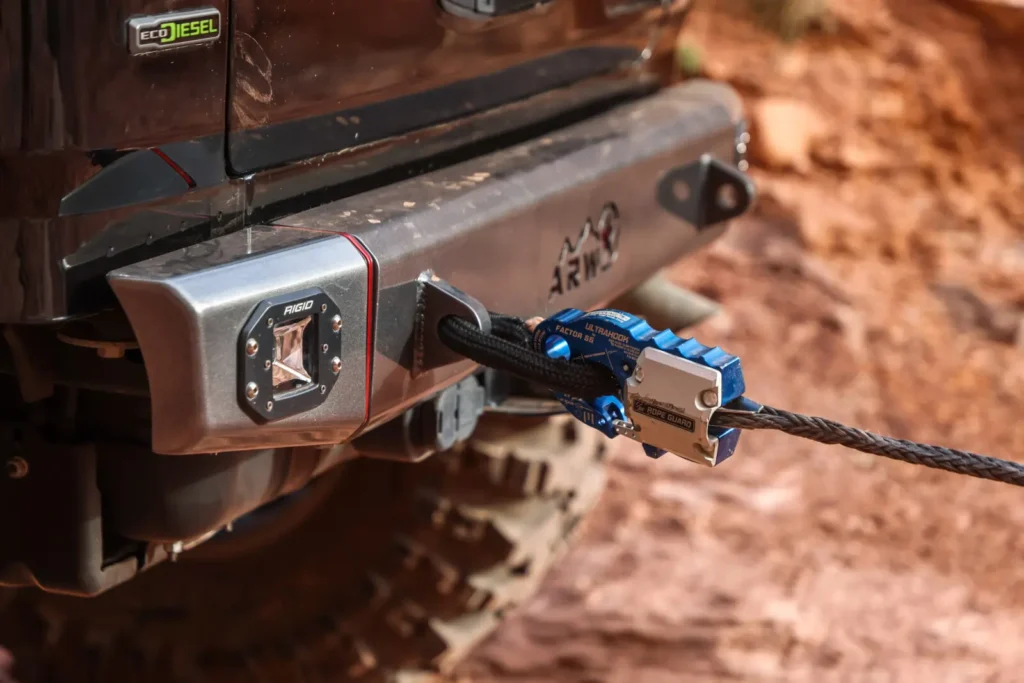
Getting stuck off road or in remote terrain is never fun, especially when you’re driving solo. But with the right approach and tools, you can recover your truck on your own.
Here’s a practical breakdown for solo truck recovery.
Start by removing any mud, snow, sand, or debris around all four tires, especially the drive wheels. Use a shovel or even your hands if needed.
Tip: If you’re using TruckClaws, you often don’t need to dig extensively. Their clamp on traction system attaches directly to the tires, making it easier to get moving without having to clear out a full path.
Once the tires are exposed and ready, follow these steps:
Unlike bulky traction boards like MaxTrax that require precise placement and space underneath the tires, TruckClaws can be deployed in tighter conditions and reused multiple times in a single trip.
They’re especially useful in narrow trails where positioning mats isn’t practical.
Sometimes reducing tire pressure (a technique known as airing down) increases the surface area of your tires, helping them grip soft surfaces like sand or snow better.
If you’re equipped with a winch, attach it to a solid anchor: a tree, rock, or recovery device like a deadman anchor. You can also use hi-lift jacks or traction boards as anchors in a pinch.
But what if you don’t have a winch?
TruckClaws can serve as your complete solo recovery solution, especially when you’re off the grid. Their portability and versatility make them a reliable backup when mechanical recovery tools aren’t an option.
Getting stuck alone on a back road, trail, or snow covered route isn’t just frustrating, it can be dangerous if you’re unprepared.
Whether you’re overlanding solo or hauling through remote regions, having the right truck recovery gear is essential.
Here’s a trail tested checklist of off road recovery tools every driver should carry:
✅ TruckClaws traction aid, A must have traction aid that clamps onto your tires in minutes and gets you moving without needing bulky boards or a winch. TruckClaws are especially valuable for commercial truckers and overlanders who often drive solo.
✅ Tire deflator & inflator, For controlled deflation and reinflation when managing different terrain types.
✅ TPMS + air compressor, Keep your tires at the right pressure before and after recovery.
✅ Winch + tow straps, Ideal when driving with a buddy or if you’re equipped to self anchor.
✅ Shovel + work gloves, For digging out around tires and clearing obstacles safely.
✅ Dash cam, Essential for insurance purposes and capturing the incident for reference.
✅ Portable lights + emergency communication device (like inReach or Zoleo), Stay visible and reachable even in areas without cell signal.
Pro tip: If you rely on tools like MaxTrax or recovery boards, remember they can be tough to use alone, especially in deep mud or uneven terrain.
TruckClaws offer a faster and more solo friendly solution, fitting securely on your drive wheels without requiring perfect surface conditions.
When you’re off roading alone, every minute matters. That’s where TruckClaws outperform traditional traction boards like MaxTrax, especially in urgent, solo recovery situations. Here’s a side by side breakdown:
| Feature | TruckClaws | Traction Boards (e.g. MaxTrax) |
| Portability | Compact, fits easily in toolboxes or under seats | Bulky, often needs roof racks or bed mounts |
| Setup Time | Clamp on design means no digging or terrain prep | Often requires clearing ground or digging |
| Reusability | Heavy duty, reusable on snow, mud, or sand | Can warp or crack in rugged, cold conditions |
| Price | Budget friendly and accessible | Higher cost, especially for beginners |
| Ideal For | Solo recovery in mud, sand, snow, or ice | Team recovery, flatter terrain, group trips |
Solo truck recovery means you are the driver and the rescuer. TruckClaws act like emergency traction cleats, fast to deploy and rugged enough to use again and again.
They’re the go to off road traction tool for overlanders, hunters, and truckers who can’t afford to be stuck.
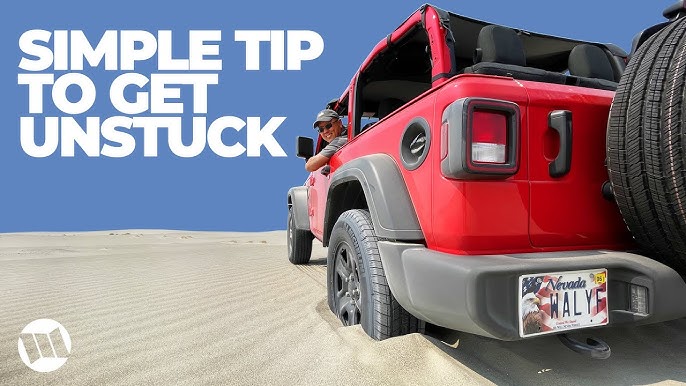
Preventing recovery situations starts long before you hit the trail. Here’s how experienced overlanders and solo truckers keep their trips smooth:
Use apps like Gaia GPS or OnX Offroad to preview elevation, terrain type, and water crossings. This helps avoid risky paths, especially when traveling alone.
Follow tire pressure best practices:
Use steady throttle to maintain motion without spinning tires. Over spinning digs you in deeper and can ruin traction aids.
Run mock recoveries in safe environments to get comfortable using tools like TruckClaws, winches, and traction boards under pressure.
Check:
Follow Tread Lightly! principles, adhere to BLM trail guidelines, and secure your OHV permits where required. Responsible off roading ensures trails stay open for everyone.
Solo overlanding doesn’t have to be risky: not when you’re equipped with the right mindset, tools, and trail knowledge.
From mastering recovery basics to carrying dependable gear, preparation is your real lifeline.
Whether you’re crawling Utah’s sandy trails or tackling icy passes in the Rockies, TruckClaws belongs in your recovery kit.
Unlike bulky boards or unreliable hacks, TruckClaws deliver real traction where and when it matters most.
Don’t gamble with terrain. Equip your truck with serious recovery power. Go prepared. Go with TruckClaws.