
Truck tires have many symbols and markings on their sidewalls. These markings tell you important information about the tire’s size, load capacity, speed rating, and winter performance.
Knowing how to read these symbols helps truck owners choose the right tires and use them safely, especially in snow, ice, and slippery roads.
For rear wheel drive trucks and pickups, winter driving can be tricky. Tires alone might not always give enough grip, and ignoring these markings can lead to slipping, loss of control, and unsafe driving conditions.
That’s why understanding tire symbols is not just about rules. It’s about winter driving safety and protecting your truck.
Even with proper tire selection, using modern traction aids like TruckClaws can boost stability on icy roads. Paired with the right tires, these tools help your truck maintain traction and control, reducing the risk of accidents or getting stuck.
Every truck tire has a DOT code stamped on its sidewall. This code shows that the tire meets U.S. safety standards and is approved for road use. Checking this code ensures your tires comply with regulations and helps you stay safe while driving.
Following the DOT code is the TIN (Tire Identification Number). This number tells you the manufacturer, plant, and production date of the tire.
The last four digits of the TIN indicate the week and year the tire was made. For example, “3815” means the tire was manufactured in the 38th week of 2015.
Knowing how to read these markings is important for tire maintenance and winter driving safety. It helps you avoid old or worn out tires, ensuring your truck performs well on snow, ice, and slippery roads.
Truck tires use letter prefixes to show the type of vehicle they are designed for. For example:
Some tires also have load capacity indicators, such as XL, HL, or Reinforced, which tell you how much weight the tire can safely carry.
These symbols work together with the load index and speed rating to help you choose the right tire for your truck.
Knowing the difference between LT, C, and P truck tires is important. Using the correct tire type ensures better traction on icy or snowy roads.
When paired with emergency traction aidslike TruckClaws, it further improves grip and stability in winter driving conditions.
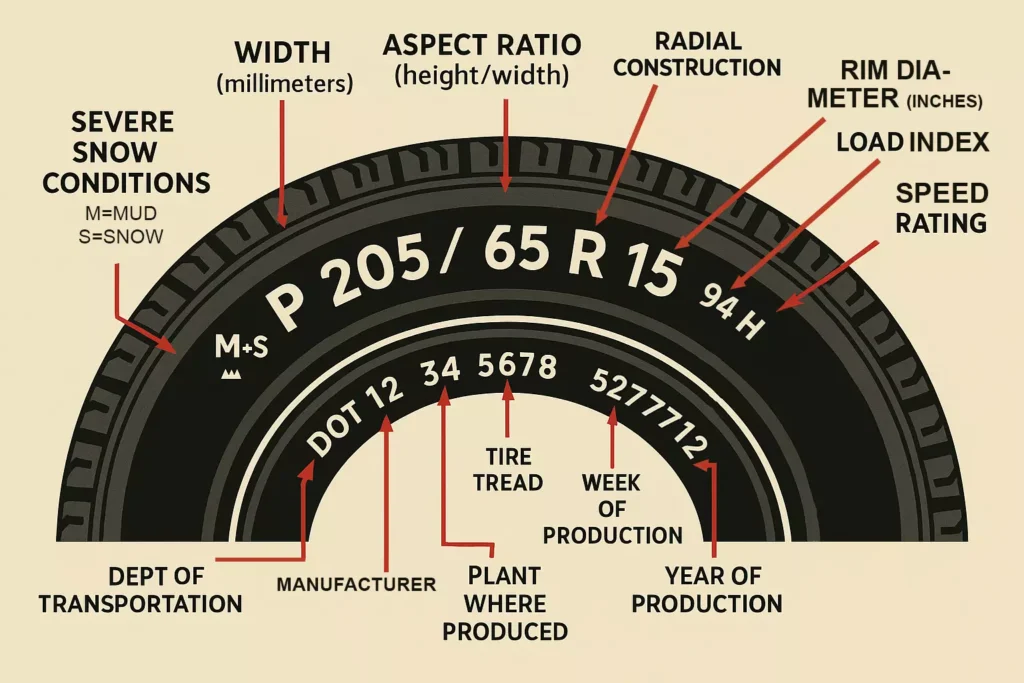
Every truck tire has a load index and a speed rating. The load index shows how much weight a single tire can safely carry.
For example, a load index of 154 means the tire can hold up to 3,750 kg. The speed rating indicates the maximum speed the tire can handle safely, such as 91V, which shows both load and speed limits.
Paying attention to tire load index and tire speed rating ensures your truck performs well and stays safe.
When carrying heavier loads in winter, using commercial emergency traction aidslike TruckClaws can help maintain stability and improve grip on icy or snowy roads.
Truck tires show their size, aspect ratio, and wheel diameter on the sidewall, for example 205/55 R17.
The first number is the tire width in millimeters, the second is the aspect ratio (sidewall height relative to width), and the “R17” shows it has radial construction and fits a 17 inch wheel.
Tires can be radial or bias ply, which affects durability and handling. They are also either tubeless or tube type.
Tubeless tires are lighter, more fuel efficient, and generally safer, while tube type tires may be used for certain heavy duty applications.
Choosing the correct truck tire size and type improves performance and helps maintain traction and control, especially in winter conditions with slippery roads.
Truck tires often have special winter and performance symbols to show how they handle snow and ice.
The 3PMSF (Three Peak Mountain Snowflake) symbol means the tire is certified for severe snow conditions, while M+S (Mud + Snow) indicates it can handle mud and light snow, though it’s not certified for extreme winter use.
Winter tires sometimes have lower speed ratings, so it’s important to adjust your driving in icy or snowy conditions.
For added safety and snow and ice traction, pairing winter rated tires with traction aids like TruckClaws can help your truck maintain stability and grip in challenging winter roads.
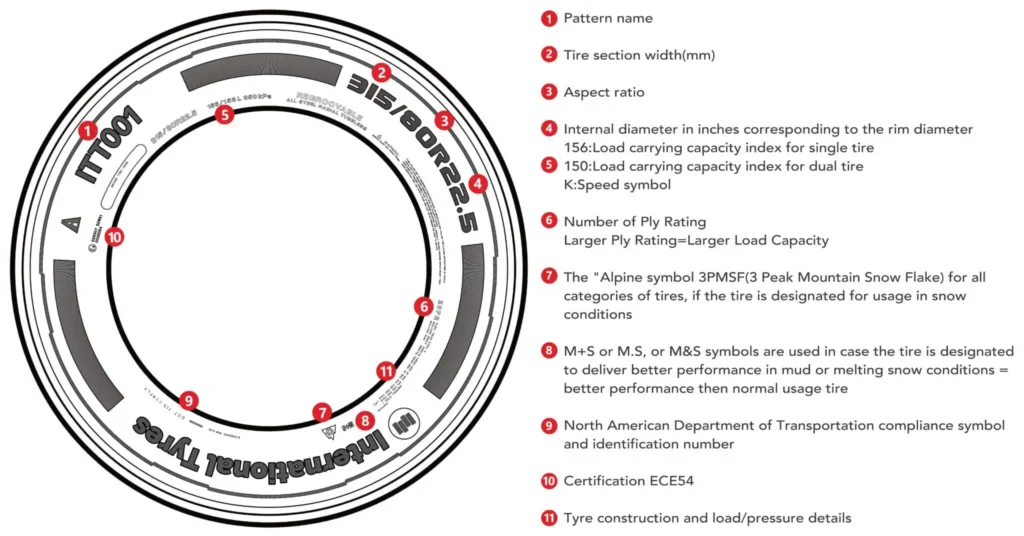
Some truck tires have an OE (Original Equipment) marking, which shows the tire is approved by the vehicle manufacturer for optimal handling, comfort, and performance.
Other certifications include FRT (Free Rolling Tire) for non-driven axles and ECE, which indicates the tire meets European safety and performance standards.
These markings help ensure your tires meet tire compliance and certification requirements, giving you confidence in safety and reliability on the road.
Truck tires have tread wear indicators that show when it’s time to replace them, usually at 2/32 inch (1.6 mm) of remaining tread. Paying attention to these indicators helps maintain winter driving safety.
Markings like MAXLOAD and MAX PRESS tell you the maximum load and pressure your tire can handle. Always follow these limits to avoid overloading and ensure proper performance.
For winter tire maintenance, regularly rotate and balance your tires, and keep them properly inflated. When extra grip is needed on worn or icy tires, using traction aids like TruckClaws can make a big difference in stability and control.
Even with the correct tires, extreme winter conditions can make it hard for trucks to maintain grip. Using traction aids is essential for safety.
TruckClaws are a reliable alternative to traditional traction mats and can help get your truck moving in snow, ice, or slush. Other options include snow chains and snow socks, but TruckClaws are easy to carry, quick to set up, and highly effective.
Understanding your truck’s traction control system and anti-skid control features, along with knowing how RWD vs 4WD behaves in winter, can further improve safety and control in challenging conditions.
A few mistakes can compromise truck tire safety and winter tire performance.
Some common errors include ignoring DOT tire date codes or symbols, using tires with the wrong load or speed ratings for winter conditions, and overlooking traction aids like TruckClaws when driving on snow or ice.
Paying attention to these details ensures tire compliance and helps maintain control, stability, and safety in winter driving.
Understanding DOT and TIN codes, tire type symbols, load and speed ratings, and winter performance symbols helps ensure your truck operates safely and efficiently.
Pairing the right tires with traction aids like TruckClaws can greatly improve winter traction and stability, especially on icy or snowy roads.
Equip your truck with the right tires and TruckClaws to stay safe and confident this winter.
DOT codes indicate that the tire meets U.S. safety standards and include the Tire Identification Number (TIN), showing the manufacturer, plant, and production date.
Look for 3PMSF (Three Peak Mountain Snowflake) or M+S (Mud + Snow) symbols on the tire sidewall, which indicate performance in snow and ice.
3PMSF tires are tested for severe snow conditions, while M+S tires can handle snow and mud but may not meet strict winter performance standards.
Replace tires when tread wear indicators reach 2/32 inch (1.6 mm), or sooner if the tire shows damage, cracks, or aging.
Yes, TruckClaws are modern traction aids that provide extra grip in slippery conditions, complementing properly rated winter tires for safer driving.