
When a semi-truck or heavy vehicle gets stuck, truckers face a tough choice: call a professional wrecker service or try self recovery using tools like TruckClaws traction aids. Both options have costs, risks, and benefits.
Professional wrecker services are fast, safe, and insured. A certified crew can recover your vehicle in under an hour, even in tricky conditions. But this convenience comes with a high upfront cost, sometimes hundreds or even thousands of dollars.
On the other hand, self recovery tools for trucks can save money upfront. Using items like TruckClaws, recovery straps, and portable winches lets you regain traction on snow, mud, or off road terrain. However, the risks include vehicle damage, safety hazards, and extra downtime if recovery fails.
Understanding the true cost of heavy duty vehicle recovery means looking beyond the price tag. Hidden costs like insurance issues, repair bills, and lost revenue can make DIY recovery more expensive than it seems.
In this guide, we will compare professional wrecker service cost versus self recovery tools, and show where TruckClaws fit as a reliable, heavy duty traction solution for OTR truckers.
Not all vehicle problems are the same. Knowing when to call a professional wrecker service versus using self recovery tools like TruckClaws traction aids can save time, money, and avoid damage.
If your truck is on a paved surface, has a flat tire, or faces minor accidents or engine failures, a professional towing service is usually the safest option. These crews use flatbeds or wheel lift trucks to move vehicles safely.
Costs are generally predictable and lower than complex recoveries, and certified operators reduce the risk of further damage.
Self recovery is best for minor issues on level ground with vehicles that are easy to reach. Tools like TruckClaws traction aids, portable winches, and tow straps can help you regain traction and get moving.
However, DIY recovery carries risks: improper use can cause vehicle damage, serious injury, or even downtime if the attempt fails. Always assess the situation carefully before skipping professional help.
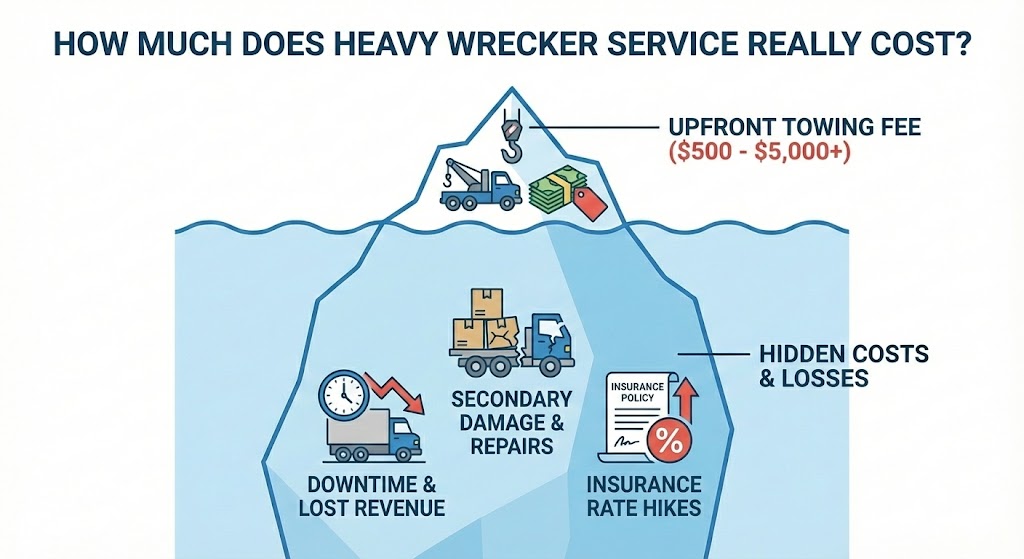
Understanding the true cost of professional wrecker service helps OTR truckers and fleet operators make smart decisions. While the upfront price is often high, it usually covers safety, speed, and reduced risk of damage.
These numbers reflect the specialized equipment (rotators, hydraulic winches) and certified operators needed to safely complete the job.
Even with professional help, there are additional costs to consider:
By factoring in these hidden costs, truckers can understand why professional services, though expensive, often prevent larger financial and safety risks.
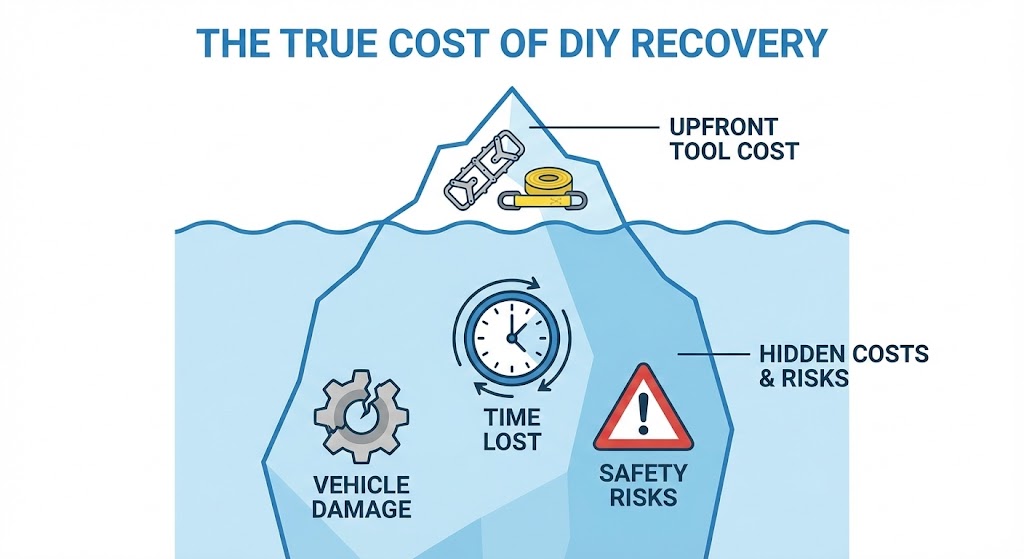
While DIY self recovery tools for trucks seem cheaper upfront, the real cost goes beyond the purchase price. Understanding both the financial and safety risks is critical for OTR truckers and fleet operators.
Considering these factors, the financial impact of improper truck recovery can outweigh the apparent savings of DIY solutions.
By keeping TruckClaws traction aids and other DIY tools as part of a well planned emergency kit, but using them properly, truckers can reduce some risk, but safety and hidden costs remain significant.
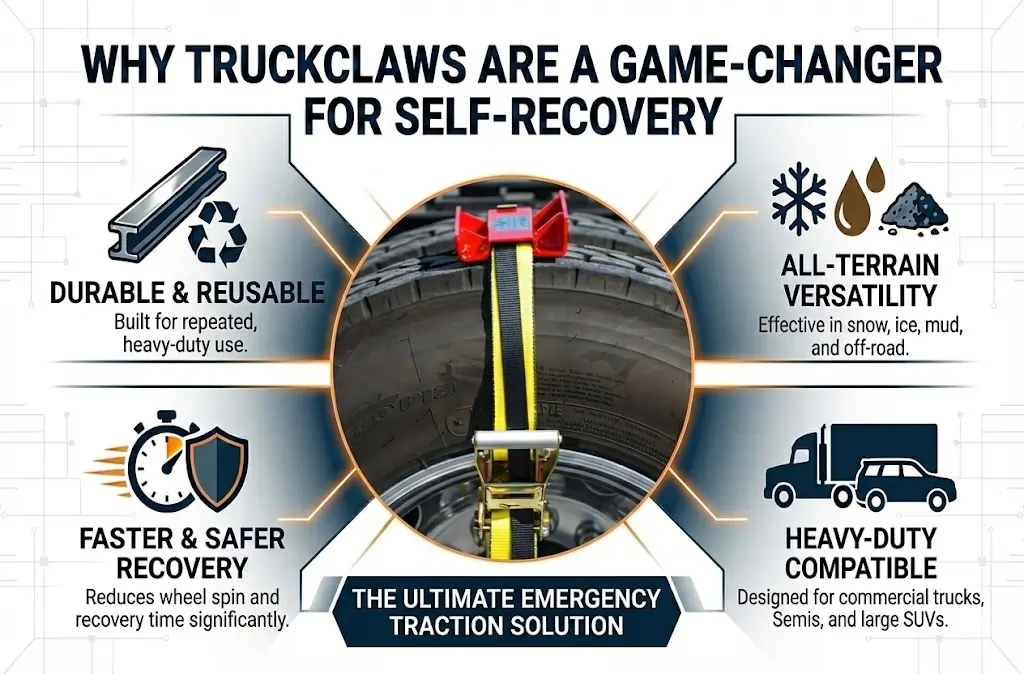
When dealing with a stuck truck, semi, or SUV, relying on basic mats or improvised solutions often wastes time and risks vehicle damage. TruckClaws traction aids provide a heavy duty, reliable solution that improves traction and safety in winter, mud, snow, and off road conditions.
While TruckClaws are highly effective, some situations may require additional tools:
For OTR truckers and fleet operators, knowing the real cost of recovery is essential. Professional wrecker services are fast and insured but come with high upfront costs. DIY recovery using TruckClaws can save money, but it carries risks if not done properly.
| Feature | Heavy Wrecker Service | DIY Self Recovery w/ TruckClaws |
| Upfront Cost | High ($500: $10,000+) | Low, Medium ($300, $5,000 for tools) |
| Safety | High (certified operators) | Medium, High risk if untrained |
| Vehicle Damage Risk | Low (insured) | Moderate, High if used improperly |
| Time Efficiency | Fast (30-60 min) | Hours: Days depending on terrain & skill |
| Best For | Rollovers, off road, heavy loads | Minor/moderate off road, snow, mud |
| Core Recovery Tool | Wrecker + certified crew | TruckClaws traction aids |
Using TruckClaws as your primary emergency traction aid can reduce the need for expensive wrecker calls for minor to moderate situations.
However, knowing your limits and combining tools like recovery straps, portable winches, or sand/kitty litter can make DIY recovery safer and more effective.
Even experienced drivers can run into trouble when attempting self recovery. Avoiding these mistakes can save your truck, your tools, and your time:
Avoiding these mistakes ensures safe vehicle traction recovery, prevents tire damage, and makes DIY recovery with TruckClaws far more effective.
DIY recovery with TruckClaws traction aids and other tools may save money upfront. However, hidden costs like vehicle damage, downtime, and safety risks can make it more expensive in the long run. Professional wrecker services are costly but provide speed, reliability, and insurance protection.
Yes. TruckClaws are heavy duty, durable, and reusable, making them ideal for repeated recovery situations in snow, ice, mud, or off road conditions. Proper cleaning and storage after each use extend their lifespan.
Improper use of DIY tools, including chains, straps, or mats, can cause frame, transmission, or suspension damage. Using TruckClaws correctly minimizes risk, but untrained recovery still carries potential for vehicle damage and insurance issues.
Call a certified heavy wrecker service when your vehicle is overturned, heavily loaded, stuck in extreme terrain, or requires specialized equipment. Certified operators reduce the risk of injury, further damage, and hidden costs.
When it comes to heavy duty vehicle recovery, knowing your options can save time, money, and stress.
Professional wrecker services are safe, fast, and insured, but they come with a high cost. On the other hand, DIY self recovery can save money upfront but carries risks such as vehicle damage, safety hazards, and hidden downtime.
This is where TruckClaws traction aids shine. They are heavy duty, reusable, and reliable, making them a smart choice for off road, snow, ice, or mud recovery situations.
When used correctly, TruckClaws reduce the risk of damage and speed up self recovery, complementing other tools like recovery straps and portable winches.
Smart truckers keep a balanced approach: invest in essential self recovery tools, maintain them well, and know when to call a professional wrecker service for complex or high risk situations.
Keep TruckClaws, recovery gear, and roadside safety essentials in your truck so you’re always prepared for unexpected emergencies.