
When a service truck gets stuck in mud, it can turn a routine job into a major headache. One moment the vehicle is performing maintenance or utility tasks, the next the drive tires are spinning, and the truck isn’t moving. Repeated attempts to power forward often dig the tires deeper, increasing downtime and the risk of damage.
For municipal fleets, contractor teams, and utility operators, this is more than just an inconvenience. Delayed service, vehicle stress, and recovery costs quickly add up. Many operators call a heavy wrecker immediately, not realizing that with proper assessment and the right traction devices, a stuck truck can often self recover safely.
From experience, the key to a fast and safe recovery is early action and using TruckClaws commercial traction devices strategically.
Step out and examine the drive tires. Determine if the truck is slightly stuck, partially sunk, or fully trapped. The depth of the rut will dictate whether self recovery is feasible or if professional recovery is necessary.
Mud on utility sites varies widely, from wet clay to soft soil mixed with debris. Understanding the surface prevents worsening the situation with unnecessary wheel spin.
Spinning the tires deeper into the mud only makes recovery harder and damages the drivetrain. Stop immediately, assess the situation, and plan the recovery.
Use a shovel or shovel kit to remove mud in front of and behind the tires. This creates a manageable path and improves traction.
If the truck is carrying heavy equipment or cargo, safely remove as much as possible. Reducing weight decreases ground pressure and increases the likelihood of recovery.
TruckClaws commercial kits provide a structured surface under the tires. This allows the truck to regain forward movement safely. Early installation prevents deeper ruts and reduces reliance on a heavy wrecker.
Once traction is restored, apply power gradually and steer carefully to avoid spinning back into the mud. Maintain smooth, controlled acceleration until the truck is free.
Even with traction aids, some situations require a heavy wrecker:
Escalate early if the situation is unsafe to avoid damage or injury.
Image suggestion: Heavy wrecker assisting service truck
ALT text: Heavy wrecker recovering service truck stuck in mud
Fleet operators should carry:
This ensures small stuck incidents do not become major delays.
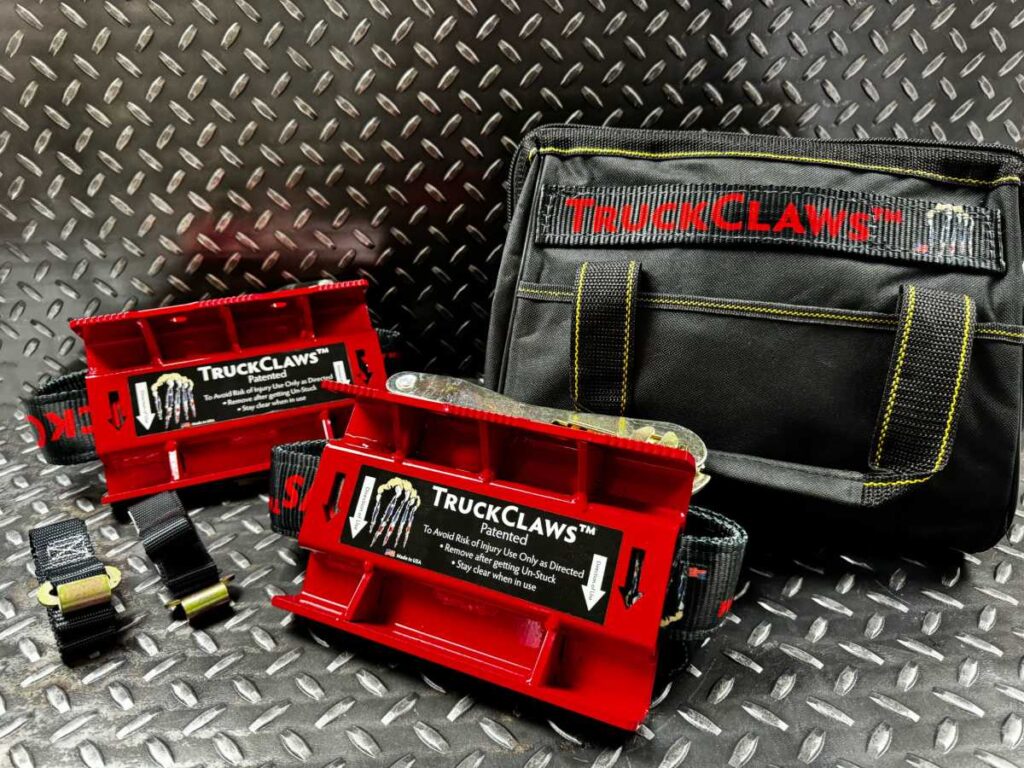
TruckClaws Commercial Kits are designed for service and utility vehicles operating in mud, soft soil, or wet conditions. Benefits include:
Avoiding these errors improves recovery success and reduces potential vehicle damage. Learn more in vehicle recovery mistakes.
After the truck is freed:
Q1: Can a service truck recover without traction aids?
Yes, in very light mud. But TruckClaws increases success rate and prevents damage to tires and drivetrain.
Q2: Are TruckClaws suitable for utility vehicles?
Yes. Commercial kits are designed for service trucks, 4×4 utility vehicles, and municipal fleets.
Q3: When should I use TruckClaws in mud?
Install as soon as wheel spin begins. Early traction restoration prevents deeper ruts.
Q4: Can TruckClaws handle soft or clay heavy mud?
Yes, the structured grip is effective on low traction surfaces, including clay and soft soil.
Q5: How do I maintain the kit on job sites?
Rinse off mud after use, inspect straps, and check traction boards for wear. Routine maintenance ensures reliable performance.
Q6: Can TruckClaws reduce the need for a tow?
Yes, early use often avoids calling a heavy wrecker, saving time and money.
A service truck stuck in mud does not always require a heavy wrecker. Early assessment, clearing mud, restoring traction, and using TruckClaws commercial traction devices allows trucks to recover safely and efficiently.
Practical takeaway: Carry a TruckClaws kit, stop wheel spin immediately, and restore traction early to avoid downtime, costly towing, and vehicle damage.