
When a box truck gets stuck in mud, every minute counts. One moment you’re backing into a customer yard, the next the drive tires are spinning, the truck isn’t moving, and repeated throttle attempts make the situation worse.
For owner operators and fleet managers, this is more than a delay. Missed deliveries, recovery costs, and vehicle damage can quickly escalate. Many drivers call a heavy wrecker without realizing there are safer, faster ways to get moving again.
The good news is that with the right approach and traction aids, a stuck box truck can often recover without waiting hours for towing.
Box trucks are lighter than semi trucks but still heavy enough that soft soil, wet grass, or mud removes traction quickly. Even a short stop on unstable ground can cause the drive tires to dig in.
On most customer sites, the surface may look firm. But hidden soft patches can trap trucks, especially in:
From experience, even experienced drivers get surprised by how quickly traction disappears.
Continuing to spin the tires is the most common error. Every rotation removes more soil under the tread, deepening ruts, stressing the drivetrain, and increasing the chance of tire damage.
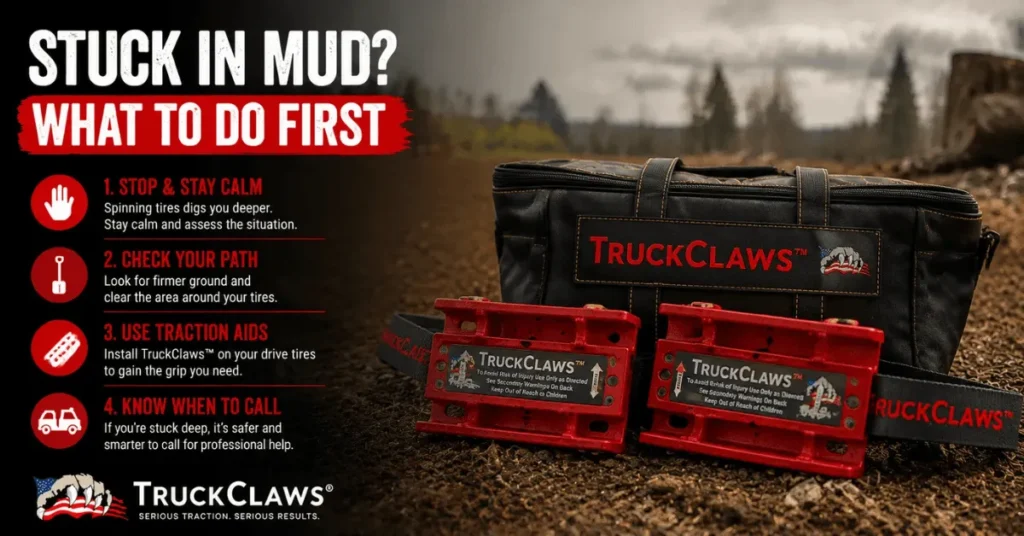
Signs you’re digging the truck deeper include:
If any of these happen, stop immediately and assess the situation.
Understanding how stuck the truck is helps decide whether self recovery is possible or if professional help is needed.
Light sinking: shallow ruts, tires mostly above mud, slight movement, traction restoration usually works.
Moderate sinking: tires partially buried, limited movement, requires careful traction support.
Severe entrapment: tires deeply buried, frame near ground, may need professional recovery.
Removing packed mud around the drive tires creates a path for movement. If the cargo can be safely unloaded, reducing weight decreases pressure on the soft ground.
Creating a stable surface may involve:
A truck with restored traction moves; one without digs deeper.
Delaying traction restoration makes recovery harder. That’s why many professional drivers carry TruckClaws traction devices. They provide structured grip under the tires, allowing controlled forward movement even on mud, soft soil, or wet grass.
Using TruckClaws early often prevents calling a heavy wrecker, reducing downtime and costs.
Check out the Box Truck Recovery Kit.
Some situations require professional recovery:
Safety always comes first. Avoid unnecessary damage or injury.
For commercial box trucks:
This gear reduces downtime and prevents minor problems from becoming major recovery operations.
TruckClaws Commercial Kits are built for vehicles that lose traction in mud, snow, soft soil, or wet grass. For box trucks:
Learn more about self recovery gear for box trucks.
Avoiding these keeps recovery safe and efficient. More details: vehicle recovery mistakes.
Before moving again:
Q1: Can a box truck recover without traction aids?
In light mud, yes. But using TruckClaws increases success rate and reduces risk of further damage.
Q2: How heavy a box truck can TruckClaws handle?
Commercial kits are designed for box trucks, service trucks, and utility vehicles under normal delivery loads.
Q3: When is it better to call a heavy wrecker?
If the frame is resting on the ground, axles are buried, or multiple recovery attempts failed, call professional assistance.
Q4: Can one driver carry all necessary recovery gear?
Yes, a compact self recovery kit with traction aids, shovel, gloves, and lighting is sufficient for most delivery trucks.
Q5: How do I prevent getting stuck again?
Plan routes carefully, avoid soft shoulders, and carry TruckClaws traction devices for high risk deliveries.
A box truck stuck in mud does not always need a heavy wrecker. Early assessment, clearing mud, restoring traction, and using the right tools: especially TruckClaws traction aids, often allows the truck to move safely, save time, and prevent damage.
Practical takeaway: carry a commercial recovery kit and use traction aids at the first sign of getting stuck. This keeps your deliveries on schedule and avoids unnecessary costs.