
Driving on icy roads can be scary, especially for trucks, SUVs, and vehicles with trailers. Ice makes tires lose grip, and even small slides can quickly become dangerous. Many accidents happen because drivers panic or try to stop suddenly.
The good news is that you can stay safe if you know the right steps. Staying calm, controlling your steering, and avoiding sudden braking are the first things you should do when your vehicle starts sliding. Understanding these recovery techniques can prevent serious accidents.
Sometimes, even careful driving isn’t enough. In emergency situations, tools like TruckClaws can help you regain traction on ice and get your truck moving safely.
Carrying a set of TruckClaws in your vehicle adds an extra layer of protection for slippery roads.
By following simple steps and using the right equipment, you can reduce risks and drive confidently, even in icy conditions.
When a truck slides on ice, it happens because tires lose grip. Ice is very slippery, so even strong brakes or careful steering can sometimes fail. This makes it harder to control your truck, SUV, or trailer, especially on curves or slopes.
Ice and snow create conditions similar to hydroplaning on wet roads, where the tires lose contact with the surface and traction disappears.
One common problem is a rear-wheel slide, where the back of the truck swings out. If not corrected, this can lead to oversteer, causing the vehicle to spin.
For trucks towing trailers, this can turn into a jackknife, which is very dangerous because the trailer can swing sharply and block the road.
Understanding your vehicle’s weight distribution helps you manage these situations. Heavier trucks may slide differently than lighter ones, and proper control of throttle and steering can turn a slide into a controlled slide, reducing the risk of accidents.
Using traction aids like TruckClaws during emergencies can also help regain grip if your tires can’t hold on ice.
By knowing how your truck behaves on ice and staying calm, you can take the right actions to recover safely.
The first rule when your truck or trailer starts sliding on ice is to stay calm. Panicking can make the situation worse. Instead, focus on where you want the vehicle to go, not on obstacles or other cars around you.
Never brake hard. Locked brakes on ice make your tires lose even more grip, increasing the risk of losing control. Ease off the brake pedal and let your wheels turn freely to help regain traction.
Use counter-steering to stabilize your truck. If the rear slides left, gently steer left. If it slides right, steer right.
This helps the vehicle realign safely without spinning out. Once the truck starts to straighten, gradually align your wheels with the road to maintain stability.
If you are towing a trailer, be extra careful. Improper steering or braking can cause jackknife, where the trailer swings sharply and may block traffic. Keeping smooth, controlled movements is key to staying safe.
In case traction is low, having emergency aids like TruckClaws in your vehicle can help you regain grip quickly if the tires can’t hold on ice.
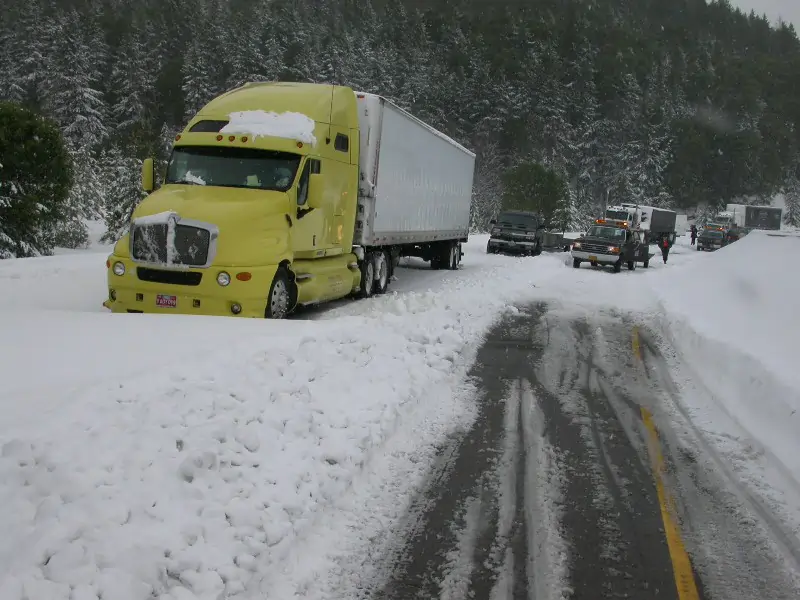
Even careful drivers can get stuck on icy roads. The first step is to clear snow and ice around your drive wheels. Removing buildup helps your tires make better contact with the road.
Next, use traction aids like TruckClaws, sand, gravel, or even floor mats to create grip under your tires. TruckClaws are especially handy because they are durable, easy to deploy, and work well for trucks and SUVs.
Try to gently rock your vehicle by shifting between reverse and drive. This can help build momentum and get your truck moving again. Be careful not to spin the wheels too fast, or you may dig yourself in deeper.
If traction is still low, slightly deflate your tires to increase the contact patch. Remember to refill them once you’re free to maintain proper tire pressure.
If self-recovery fails, don’t hesitate to call roadside assistance. Safety is the priority, and waiting for help is better than risking an accident on ice.
When your truck or SUV gets stuck on ice, having the right traction aids can make a big difference. There are several options, but some are safer and easier to use than others.
TruckClaws are a reliable choice. They are easy to deploy, durable, and work well for trucks, SUVs, and even trailers. Unlike tire chains, you don’t need to lift the vehicle to install them, and they provide immediate grip on icy surfaces.
Tire chains offer strong traction too, but they can be difficult to install and may be restricted by law in some areas. They also take longer to put on in emergency situations.
Floor mats or improvised aids like sand and gravel can help in a pinch, but they aren’t as reliable as TruckClaws, especially for larger vehicles or deep ice patches.
It’s smart to carry a set of TruckClaws in your emergency kit during winter. They are lightweight, reusable, and can save time and stress when you get stuck on icy roads.
Driving safely on icy roads is not just about having good tires—it’s also about using the right techniques.
Start with counter-steering. If the back of your truck or SUV slides, gently steer in the same direction as the slide.
This helps regain control without spinning out. Always use gradual acceleration and braking to avoid locking the wheels and losing traction.
Modern trucks and SUVs often come with safety systems like ABS, traction control, and electronic stability control (ESC). Learn how to use these effectively—they can help keep your vehicle stable on slippery roads.
Keep a safe distance from other vehicles. Ice reduces stopping power, so leaving extra space gives you time to react.
Understanding weight transfer during slides is also important: shifting your vehicle’s weight smoothly can help regain control without sudden jerks or oversteer.
Combine these techniques with traction aids like TruckClaws in emergencies, and you’ll be much better prepared to stay safe on icy roads.
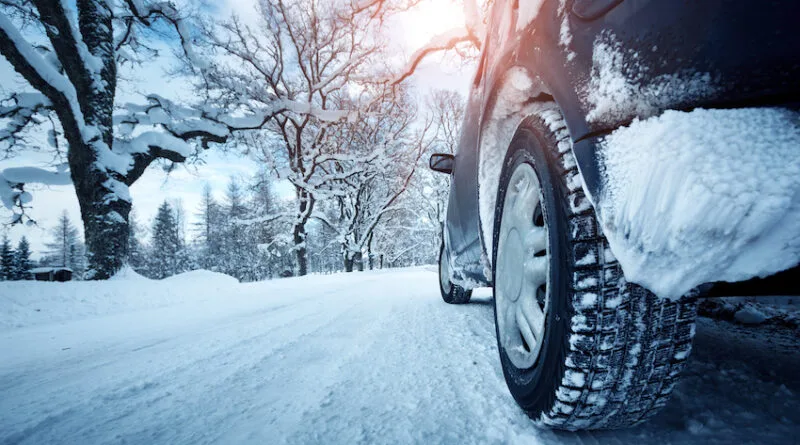
Your choice of tires plays a huge role in recovering safely on ice. Winter tires are designed with soft rubber compounds and special tread patterns that stay flexible in cold temperatures, giving better grip than all-weather or summer tires. This makes a big difference in stopping distance and control during slides.
All-weather tires are convenient for year-round use, but they cannot match the traction of dedicated winter tires on icy roads. On ice, winter tires can prevent skidding, reduce oversteer, and help your truck, SUV, or EV regain stability faster.
For trucks and SUVs, look for winter tires that support heavy weight and maintain grip under load. EVs need tires that balance low rolling resistance for battery range with strong winter traction.
Choosing the right tires along with traction aids like TruckClaws ensures the safest recovery if your vehicle starts to slide.
Always steer into the slide (counter-steer) to regain control. If the rear slides left, steer left; if it slides right, steer right. Avoid sudden movements or hard braking, which can make the slide worse.
Clear snow and ice around your drive wheels. Use traction aids like TruckClaws, sand, gravel, or floor mats. Gently rock the vehicle between reverse and drive to gain momentum. Slightly deflate tires if needed, and call roadside assistance if self-recovery fails.
TruckClaws are easy to deploy, durable, and suitable for trucks, SUVs, and trailers. Tire chains provide strong traction but are harder to install, and mats or improvised aids work only temporarily. TruckClaws are ideal for emergencies and winter kits.
All-weather tires are convenient but cannot match dedicated winter tires on icy roads. Winter tires have soft rubber compounds and tread designs that maximize grip, helping with braking and control during slides.
Extra care is needed. Use smooth steering and gentle acceleration. Avoid braking hard, which can cause jackknife. Counter-steer carefully, and keep the trailer aligned with the truck. Traction aids like TruckClaws can also help if the trailer’s drive wheels lose grip.
Driving on icy roads can be dangerous, especially for trucks, SUVs, and vehicles with trailers.
The first layer of safety is always winter tires. They provide better grip, reduce stopping distances, and help you maintain control during slides.
Backup traction aids like TruckClaws are a must-have for emergencies. They are easy to use, durable, and can get your vehicle moving if it gets stuck on ice.
Finally, the safest drivers stay calm, use proper recovery techniques, and carry the right safety tools.
By combining the right tires, traction aids, and driving techniques, you can confidently handle icy roads and reduce the risk of accidents.