
On a normal cold day, you will likely wait between 45 and 90 minutes. But if a major ice storm hits places like Deerfoot Trail or Stoney Trail, that wait time can explode. In some cases, drivers are waiting 6 to 18 hours just for a simple winch out service.
This happens because modern tow companies now use AI powered dispatching. These computer programs look at all the calls and put the most dangerous accidents first. If you are safely in a parking lot, the computer might move you to the bottom of the list.
Also, more people are driving Electric Vehicles (EVs) and AWD cars now. These vehicles are heavy and often need a specialized heavy duty flatbed truck. Since there are only a few of these trucks available, the lines grow even longer.
The best way to stay safe in 2026 is to be your own hero. Instead of waiting half a day in the freezing cold for 24/7 emergency towing, you should carry the right tools in your trunk.
By switching from old fashioned mats to TruckClaws, you can pull yourself out of the snow in just five minutes. Carrying your own tire traction aids turns a scary situation into a quick fix.
In the past, tow trucks usually helped people in the order they called. Today, things are different. Most companies in Alberta use smart software to rank emergencies.
If a car is blocking a high speed highway like the QE2, the AI powered dispatching system sends a truck there immediately.
If you are stuck in a snowbank near your home, you are considered “low risk.” This means you might watch several tow trucks drive past you to get to bigger accidents.
This is why emergency towing Calgary response times can feel so slow when you are the one waiting in the cold.
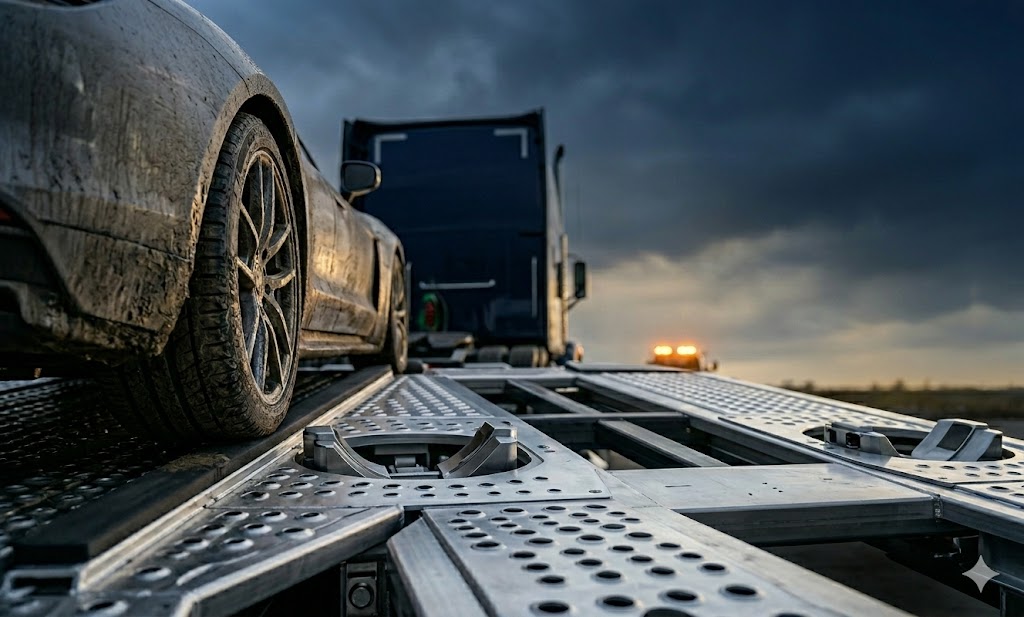
Another reason for the long tow truck wait times in winter 2026 is the type of cars we drive. Many people now have AWD (All Wheel Drive) SUVs or heavy Electric Vehicles.
These cars cannot be towed with a simple hook and chain because it can damage the motor or the battery.
Instead, these cars require a flatbed towing truck. Because these trucks are bigger and more expensive, companies have fewer of them. If ten EVs break down at the same time during a cold snap, the wait for a heavy duty flatbed becomes much longer than a normal tow.
When the weather gets bad, tow companies use a “Weather Multiplier.” This means that for every inch of snow, the wait time doubles. But you don’t have to be part of that math. This is where TruckClaws make a huge difference.
While old style plastic boards often slide away, TruckClaws are active traction tools. They strap directly to your tire.
This gives your car the mechanical advantage it needs to “climb” out of a icy rut. Instead of waiting for a winch out service to arrive, you can use these mechanical tire teeth to get back on the road before your coffee even gets cold.
When you call for a tow truck in the freezing cold, the dispatcher might give you a short estimate. However, your actual wait is calculated by a hidden formula: Base Time + Weather Multiplier + AI Priority Rank + Location Penalty.
Understanding these pieces helps you see why your tow truck wait times in winter 2026 might be much longer than you expected.
In 2026, tow companies like KTC Towing use AI powered dispatching to decide who gets help first. This computer system looks at where you are and how dangerous the spot is.
When the temperature hits extreme cold levels like $-40^\circ\text{C}$, everything changes. This is called the Weather Multiplier. At these temperatures, car batteries lose their power instantly.
If you live in the “Urban Core” of Calgary, a truck is usually just a few blocks away. However, if you are in Airdrie, Cochrane, or Chestermere, you face a Location Penalty.
Most 24/7 emergency towing trucks stay near the city center where most of the traffic is. During a snowstorm, traffic on the QE2 highway crawls to a stop.
A truck that normally takes 15 minutes to reach Airdrie might take over an hour just to fight through the slush and stalled cars. By the time they reach you, they might have already been diverted to a more “urgent” crash by the AI priority algorithms.
When you are stuck in deep snow or thick slush, you usually have two choices: wait for a professional winch out service or try to get out yourself. Most people try to use “passive” tools first, but these often fail during a Calgary winter.
To truly bypass the long tow truck wait times in winter 2026, you need to understand the difference between a tool that sits on the ground and a tool that works with your truck.
You have probably seen plastic traction boards or rubber mats. These are “passive” because they just lie on the ground. While they might work on a flat driveway, they struggle with a heavy SUV or a Class 8 truck.
TruckClaws work differently because they are “active” tire traction aids. They don’t just sit under the tire; they become part of it.
Here is a secret that tow truck drivers know: a “winch out” is a much harder job than a “simple tow.” If your car is 20 feet off the road in a ditch, you are a complex recovery call.
Because this takes a long time, the AI powered dispatching might make you wait longer until a specialized driver is free.
This is where strategic positioning comes in. If you use TruckClaws to get your vehicle out of the deep snow and back onto an accessible shoulder or the pavement, your status changes. You are no longer a “recovery” call; you are now a “simple service” call.
By moving yourself those few feet back to the road, you can “downgrade” your request in the system. This often moves you up the list and slashes your tow truck wait times in winter 2026 by hours!
Waiting for roadside assistance in the middle of a Calgary winter is more than just an annoyance, it can be dangerous.
Because of this, Alberta has specific rules to keep both you and the tow truck drivers safe. In 2026, using the right technology and following the latest laws is the best way to ensure your tow truck wait times in winter 2026 don’t end in an accident.
You may have noticed that tow trucks in Alberta now use a combination of blue and amber flashing lights. This change came from Bill 207 to help drivers see tow trucks more clearly during heavy snow or black ice conditions.
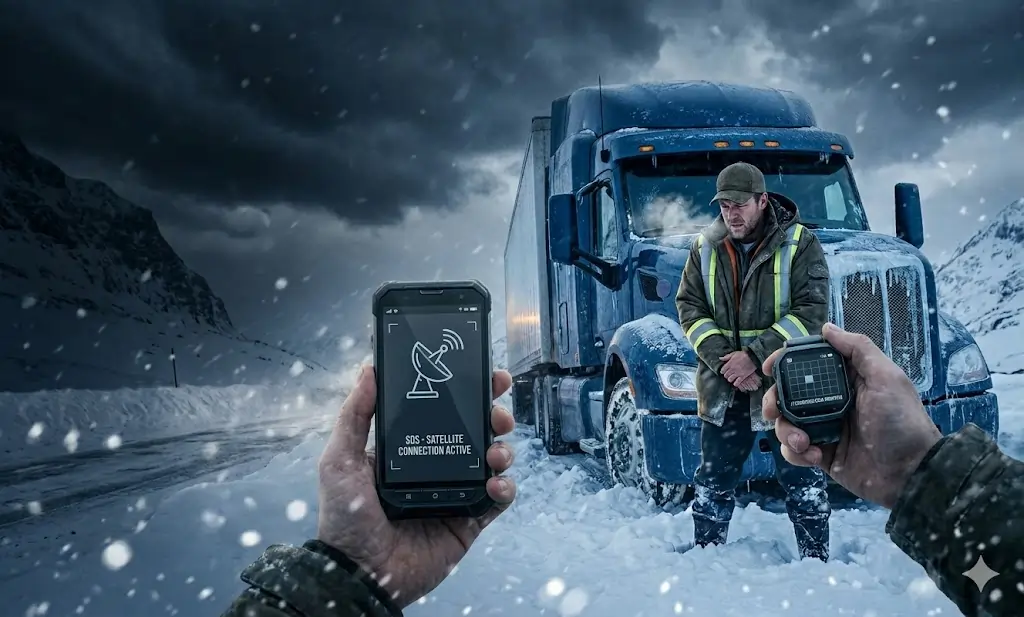
In the past, trying to describe your location on a long stretch of the QE2 or Stoney Trail was difficult. In 2026, we have better tools to help dispatchers find you instantly.
When a crash happens on a busy road like Deerfoot Trail, sometimes a tow truck will show up within minutes, even if you didn’t call one. These are often called “chasers,” and you should be very careful.
In 2026, a winter survival kit is about more than just a warm blanket. To beat the long tow truck wait times in winter 2026, you need a “dual action” kit.
Half of it should help you stay connected, and the other half should help you get moving. A good kit turns “waiting for help” into “winning against the weather.”
Technology has changed how we call for help. Your digital kit should include:
While you wait for roadside assistance Calgary, you must stay warm and have the tools to help yourself:
We have seen that the 24/7 emergency towing landscape in Calgary is more complicated than ever. Between AI powered dispatching and the massive surge in calls during a snowstorm, you simply cannot count on a fast arrival.
A small slide into a ditch on the QE2 can easily turn into a day long ordeal if you are waiting for a winch out service.
The smartest thing a driver can do in 2026 is prepare for the “Location Penalty” and the “Weather Multiplier” before they happen.
By understanding how the systems work and carrying the right gear, you take the power back into your own hands.
TruckClaws are the ultimate “wait time killer” for the modern driver. They give you the mechanical advantage to break the stiction of the snow and get back on the road in minutes.
Don’t spend your night shivering on the shoulder of the Deerfoot Trail. Get yourself unstuck and get home safely.