
A semi truck stuck in snow can create delivery delays, tire damage, drivetrain strain, and an expensive heavy-wrecker call. Loaded tractor-trailers are especially vulnerable because their weight can push the tires through loose snow until they reach packed ice underneath.
The first reaction is often to apply more throttle. That usually makes the situation worse. A safer recovery begins by stopping wheel spin, inspecting the truck, clearing a path, and restoring grip at the drive tires.
A semi truck may have ample engine power, but power cannot move the vehicle when the tires lack surface adhesion. Snow fills the tread grooves, packed ice creates a slick contact patch, and slush allows the tires to slide sideways.
The trailer adds rolling resistance. A heavily loaded trailer can push the drive tires deeper into loose snow, while an empty trailer may leave less weight over the drive axles. Both conditions can reduce traction.
Common problem areas include:
The situation can deteriorate quickly once the tires begin spinning.
Release the accelerator when the truck stops moving. Continued wheel spin removes snow from beneath the tires, creates deeper depressions, and polishes the surface into ice.
Excessive throttle can also place unnecessary strain on tires, axle shafts, differentials, and driveline components. This is one of several costly vehicle recovery mistakes drivers should avoid.
Turn on the hazard lights, apply the parking brakes, and check the surrounding area before leaving the cab. Wear reflective clothing if the truck is near traffic or visibility is poor.
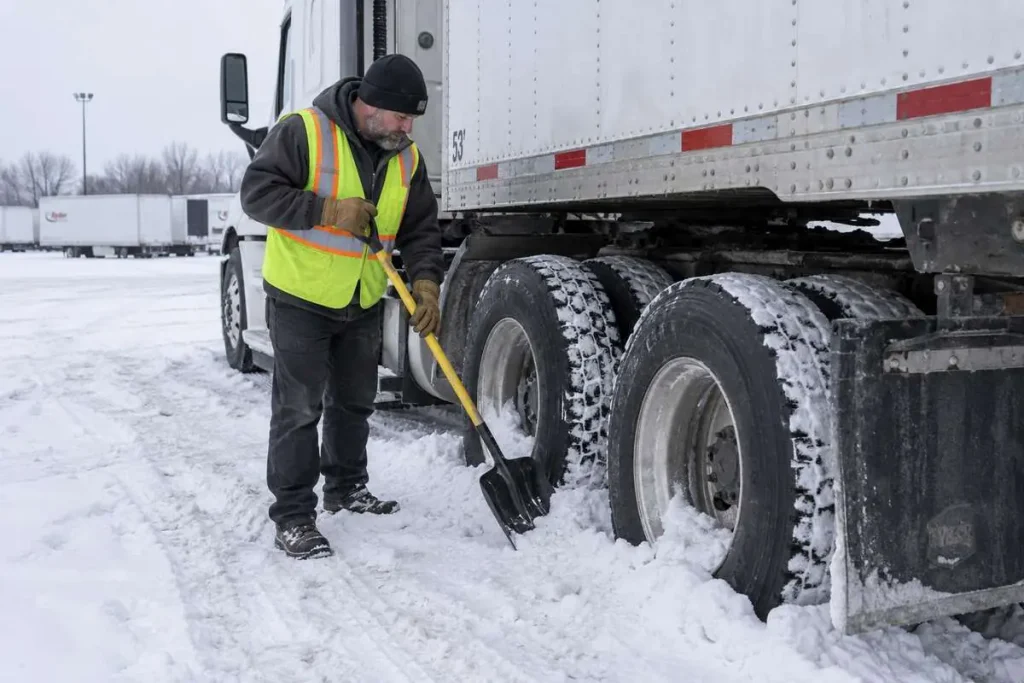
Walk around the tractor and trailer from a safe position. Look at the drive tires first.
A basic self-recovery attempt may be possible when:
The situation is more serious when the tire sidewalls are buried, several axles are trapped, or the frame is resting on compacted snow.
A high-centered truck may rest on packed snow beneath the axle, differential, frame, or trailer. When this happens, the tires carry less vehicle weight and may not develop enough grip to move.
Do not crawl beneath the truck to inspect it. Look from outside the vehicle and use a shovel to probe the snow where possible. A high-centered tractor-trailer often needs lifting, winching, or professional recovery.
Loose snow can conceal ice, curbs, drainage ditches, potholes, and steep road edges. Examine the intended recovery path before applying power.
Choose the shortest route toward firm, level ground. Moving backward through the truck’s existing tracks may be easier than forcing it farther into unbroken snow.
Traction equipment works better when the tires are not pushing against a wall of packed snow. Use a shovel to clear the front and rear of each drive tire involved in the recovery.
Create a gradual ramp rather than a sharp ledge. Remove snow touching the axle housing or differential, but never position yourself under the vehicle.
Check the trailer wheels as well. Even if the tractor regains grip, deeply buried trailer tires may prevent the combination from moving. The TruckClaws Shovel Kit can help clear compacted snow and prepare a cleaner exit path.
After digging, place sand, gravel, or approved traction granules beneath the drive tires when available. Avoid bricks, logs, loose metal, or other objects that could be thrown by a rotating tire.
TruckClaws attach directly to the tire and provide a rigid steel contact point that bites into snow, ice, mud, or soft ground. Instead of relying only on the tire tread, the truck gains a temporary mechanical gripping surface.
The TruckClaws Commercial Truck Kit is made for Class 7 and Class 8 commercial vehicles with a gross vehicle weight rating of 30,000 pounds or more. Each kit includes steel claws, reinforced straps, ratchets, and a carrying bag.
TruckClaws are designed for temporary recovery. They are not intended for normal highway driving or long-distance travel.
Super single tires require equipment designed for their wider tread and different dimensions. The TruckClaws Commercial Super Single Kit is made for heavy commercial vehicles using this tire configuration.
Do not stretch a standard system across a tire it was not designed to fit. Correct sizing keeps the claw centered and prevents unstable strap placement.
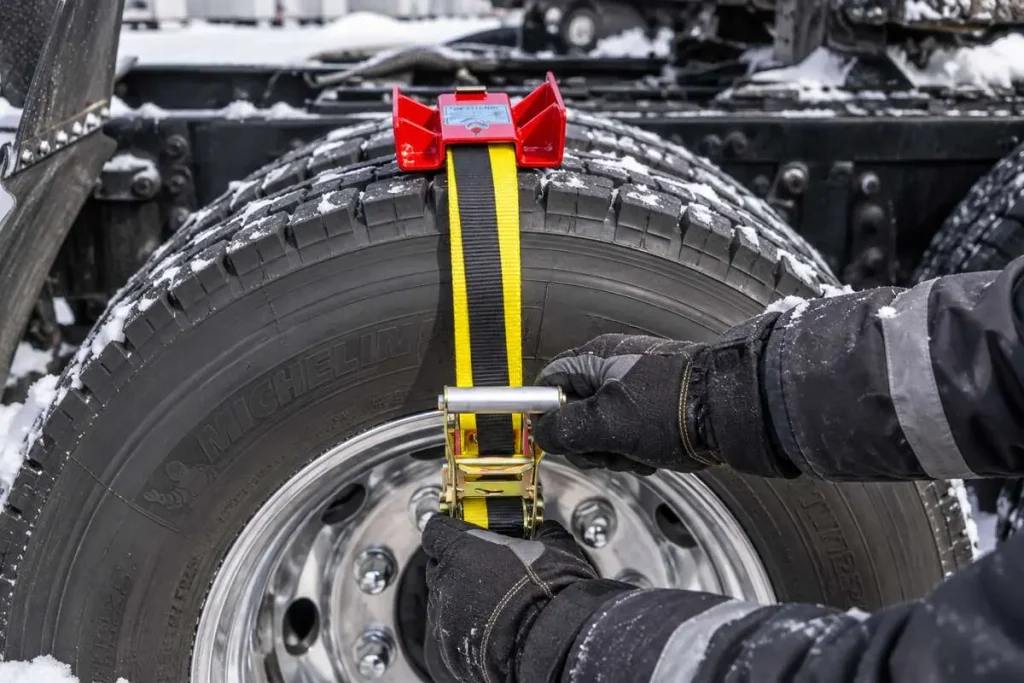
Read the TruckClaws Commercial installation guide before winter travel so the process is familiar before an emergency occurs.
Use this basic recovery sequence:
Never install recovery equipment while another person is in the cab applying power. Keep bystanders away from the front and rear of the drive tires.
Select a low gear and keep the steering wheels as straight as possible. Apply the accelerator gently so the TruckClaws can bite into the snow without creating violent wheel movement.
If the truck begins moving, maintain a slow and steady pace until every axle reaches firm ground. Do not stop halfway through the prepared path unless a hazard appears.
Release the throttle immediately if:
Stop, secure the truck, and inspect the setup before making another attempt.
Snow recovery on a grade carries added risk. A loaded trailer may pull the tractor backward or slide sideways when traction changes.
Do not attempt self-recovery if the truck cannot remain stationary under normal braking, the trailer is leaning, or the exit path crosses a steep drop. A controlled winch recovery is safer in these conditions.
Snow chains are commonly used for continuous travel on snowy roads and may be required by state or local regulations. TruckClaws serve a different purpose: temporary recovery after a vehicle has already lost traction.
A driver may carry both. Chains support travel through regulated winter routes, while TruckClaws provide concentrated grip during a stuck-truck event. The guide to traction aids versus snow chains explains how these tools differ.
TruckClaws do not replace chains where chain laws apply. Always follow posted restrictions and current transportation rules.
Not every semi truck stuck in snow can be recovered with tire-mounted equipment. Stop self-recovery attempts and call a qualified heavy-wrecker service when:
A tow bill is expensive, but damaged equipment, a rollover, or a roadside injury can cost much more. Drivers comparing those expenses can review the TruckClaws guide to heavy-duty towing costs.
Once the truck reaches firm ground, remove the TruckClaws and inspect the vehicle before returning to the road.
Check the following areas:
Listen for grinding, clunking, or new vibration during the first slow movement. Stop and request mechanical support if the truck behaves differently from normal.
Clean snow, road salt, and moisture from the claws, straps, and ratchets. Inspect the webbing for cuts, fraying, or damaged stitching before placing the equipment back in its bag.
A practical winter recovery kit should include:
Inspect this equipment during routine pre-trip checks. Drivers can also review the official TruckClaws frequently asked questions for product fitment and usage guidance.
Can a semi truck get unstuck from snow without a tow truck?
Yes. Self-recovery may work when the truck remains level, the axles are clear, and the main problem is lost tire traction. A buried, high-centered, leaning, or damaged truck needs professional assistance.
Which tires should receive TruckClaws?
TruckClaws are normally fitted to the powered drive tires according to the product instructions. Placement depends on the wheel design, tire configuration, and available clearance.
Do TruckClaws work on packed snow and ice?
TruckClaws are designed to provide a rigid gripping point on slippery surfaces. Results depend on correct installation, vehicle weight, snow depth, surface conditions, and controlled throttle.
Can TruckClaws be used on super single tires?
Yes, when the Commercial Super Single Kit is selected and fitted according to its instructions.
Can a driver leave TruckClaws installed after getting unstuck?
TruckClaws should be removed after the vehicle reaches firm ground. They are recovery equipment, not a replacement for normal tires or highway traction systems.
Do TruckClaws replace required snow chains?
No. Drivers must still comply with chain laws and posted winter-road restrictions.
When a semi truck gets stuck in snow:
Early action makes a major difference. When lost traction is the main problem, TruckClaws can give a semi truck the grip needed to move out of snow before a short delay becomes a full recovery operation.