
When it comes to hauling heavy loads, choosing the right truck for towing can make all the difference.
Did you know that nearly one in four trucks sold in the United States are purchased primarily for towing purposes?
This highlights the growing demand for high towing capacity trucks, not only for recreational activities like towing boats and RVs but also for commercial and industrial applications.
As industries and outdoor enthusiasts alike require more robust trucks for their daily operations, the need for trucks with superior towing capabilities is more important than ever.
Whether you’re towing a small trailer for your weekend getaway or a heavy duty construction trailer, the truck you choose must be up to the task.
In this article, we’ll explore the best trucks for towing, discussing the top light duty trucks that can handle everyday hauling and the heavy duty trucks that are built for extreme towing demands.
We will also dive into essential towing technologies like Trailer Sway Control, Integrated Trailer Brake Controllers, and Tow Haul Mode that make these trucks capable of safely and efficiently handling large loads.
When selecting the best truck for towing, one of the most critical factors to consider is towing capacity, the maximum weight a truck can safely pull.
This number is essential for truck owners as it determines the type of loads your vehicle can handle, whether you’re towing a small trailer, a camper, or heavy industrial equipment.
Towing capacity is determined by factors such as engine power, transmission, brakes, and axle ratio. Exceeding this limit can lead to mechanical failures, reduced safety, and potential accidents.
Knowing your truck’s Gross Vehicle Weight Rating (GVWR) and Gross Combined Weight Rating (GCWR) ensures that you stay within safe limits, protecting both your truck and your load.
The choice between light duty and heavy duty trucks comes down to your towing needs:
Understanding the difference between these categories can help you make an informed decision:
By selecting the right truck category, you can ensure your vehicle meets your towing demands while delivering optimal performance and safety.
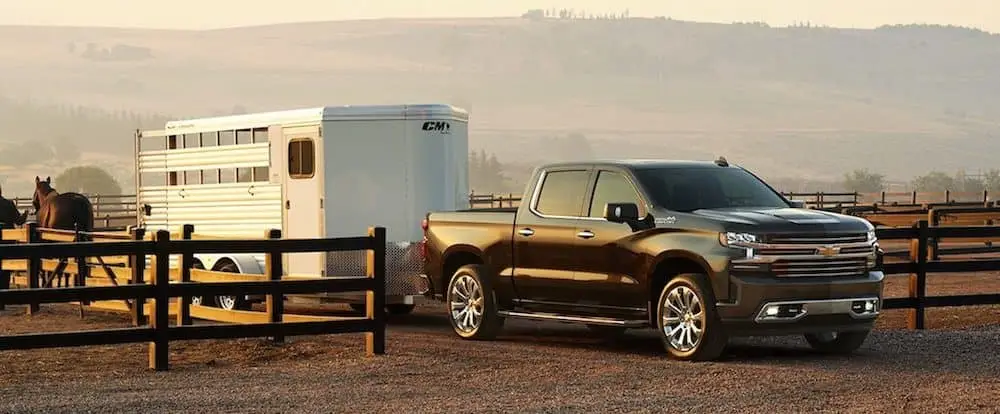
Modern trucks are equipped with advanced towing technologies that enhance safety, efficiency, and control, making it easier for drivers to handle heavy loads.
Whether you’re towing a lightweight trailer or a massive camper, these technologies ensure a smoother and safer experience.
Below are some of the must have features to consider when choosing the best truck for towing.
One of the biggest concerns when towing is maintaining stability on the road, especially during sudden turns, gusts of wind, or uneven terrain.
Trailer Sway Control is a critical feature designed to counteract the swaying motion of trailers by applying brakes selectively to individual wheels or adjusting engine torque.
Having this feature provides peace of mind when towing, ensuring both your safety and the safety of others on the road.
For detailed comparisons of trucks with this feature, consult resources like Four Wheel Trends.
Towing heavy loads demands exceptional braking performance, and the Integrated Trailer Brake Controller delivers precisely that.
This system ensures smoother and more reliable braking by synchronizing the trailer’s brakes with the truck’s braking system.
The Ram 2500, Ford F-250, and GMC Sierra 3500HD offer factory installed Integrated Trailer Brake Controllers, making them excellent choices for towing enthusiasts.
More insights into this technology can be found on KBB.com.
Towing on steep inclines poses unique challenges, such as rolling back when starting on a hill.
Hill Start Assist prevents this by holding the brakes momentarily as the driver transitions from the brake pedal to the accelerator.
Trucks like the Ford F-150, Chevrolet Colorado, and Toyota Tundra often come equipped with Hill Start Assist, a feature highly recommended by experts at Four Wheel Trends.
By choosing a truck with these technologies, you’ll benefit from increased control, safety, and convenience during towing.
These advancements make modern trucks indispensable tools for both casual and professional towing needs.
Modern trucks are more than just powerful engines and robust frames; they are equipped with advanced systems designed to enhance towing performance, safety, and ease of use.
These truck towing systems provide cutting edge solutions for drivers handling heavy loads, ensuring both efficiency and control.
When towing heavy loads, maintaining optimal engine performance and gear shifts is critical.
Tow Haul Mode is a feature designed specifically to adjust the truck’s performance for smoother and safer towing.
Popular models like the Ford Super Duty and Chevrolet Silverado 2500HD include Integrated Tow Haul Mode, making them top choices for drivers with frequent towing needs.
Advanced Towing Assistance Systems are game changers in simplifying and enhancing the towing process.
These systems leverage technology to provide better control and visibility while towing.
Trucks like the Ram 1500 and GMC Sierra 3500HD are equipped with advanced Towing Assistance Systems, praised by experts at Four Wheel Trends for their reliability and ease of use.
By incorporating systems like Tow Haul Mode and Towing Assistance, these trucks not only make towing safer but also ensure a more comfortable and efficient experience.
For both seasoned professionals and weekend adventurers, these features are invaluable in meeting today’s diverse towing demands.
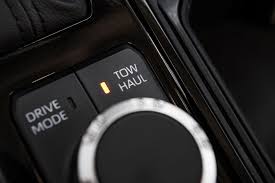
When choosing the best truck for towing, the type of engine plays a pivotal role. Each engine type offers unique benefits, catering to diverse towing needs.
Let’s explore how EcoBoost, Hemi, and Duramax Diesel engines deliver power and efficiency for towing.
Ford’s EcoBoost engines, particularly the twin turbocharged 3.5L V6, combine fuel efficiency with impressive towing power.
Found in models like the Ford F-150, this engine can tow up to 14,000 pounds when equipped with the Max Towing Package.
If you need a truck that offers versatility and cost efficiency, EcoBoost powered trucks stand out as a leading choice.
Ram’s Hemi engines, particularly the iconic 5.7L Hemi V8, are celebrated for their raw power and exceptional torque.
The combination of power and innovation makes the Hemi engine a favorite among professionals.
Chevrolet and GMC trucks equipped with Duramax Diesel engines are engineered for maximum towing strength.
For those prioritizing sheer towing power, Duramax Diesel engines lead the pack in handling demanding jobs.
Selecting the right engine type depends on your towing requirements.
While EcoBoost engines offer a balance of power and efficiency for lighter loads, Hemi engines shine with their versatility and strength.
For those handling the heaviest loads, Duramax Diesel engines provide unparalleled towing capacity and reliability.
By understanding the capabilities of these engine types, truck owners can choose a model that aligns with their specific needs, ensuring both performance and safety.
Safety is paramount when towing, as larger loads demand heightened awareness and precision.
Modern trucks are equipped with advanced features to enhance safety and minimize risks during towing. Here are two indispensable technologies that improve the towing experience.
Hitching a trailer or towing large loads often limits rear visibility, making precision maneuvers challenging. Rearview cameras provide a clear, wide angle view of the area behind the truck, enabling safer and more accurate hitching and reversing.
For truck owners towing heavy loads, rearview cameras are an essential tool for enhancing visibility and ensuring precision in tight spaces.
Towing a large trailer creates blind spots that conventional mirrors cannot cover, increasing the risk of side collisions.
Blind Spot Detection systems are designed to address this issue, providing real time alerts about vehicles or obstacles in blind spots.
With these systems, drivers can confidently navigate highways and crowded areas, maintaining safety for themselves and other road users.
Modern towing safety features, such as rearview cameras and blind spot detection, significantly enhance the towing experience.
By investing in a truck equipped with these technologies, drivers can enjoy greater convenience and peace of mind, knowing their setup is optimized for safety.
Known for its versatility, the Ford F-150 remains a leader among light duty trucks.
It offers various engine options, including a 3.5L EcoBoost V6 that enables a maximum towing capacity of 14,000 pounds, ideal for recreational towing and daily hauling.
Its advanced towing features, like Pro Trailer Backup Assist, ensure ease of use for drivers new to towing.
This truck provides impressive towing capabilities with a maximum capacity of 13,300 pounds when equipped with the 6.2L V8 engine.
Chevrolet also includes features like the Max Trailering Package, which enhances stability, and a multi-camera trailering system for enhanced safety.
The Ram 1500 combines luxury with performance, boasting a maximum towing capacity of 12,750 pounds with its 5.7L Hemi V8 with eTorque.
Features like the Active Level Four Corner Air Suspension optimize towing performance by maintaining balance and reducing drag【79†source】【80†source】.
This powerhouse delivers unmatched capability with a towing capacity of up to 22,800 pounds when equipped with the 6.7L Power Stroke Diesel V8.
Its Tow Technology Package includes Pro Trailer Backup Assist and Trailer Reverse Guidance for enhanced maneuverability.
The Silverado 3500HD leads in the heavy duty segment with a maximum towing capacity of 36,000 pounds when using a fifth wheel configuration.
It also includes features like Digital Variable Steering Assist and a Trailering App for effortless towing.
Renowned for its Cummins Turbo Diesel engine, the Ram 2500 achieves a towing capacity of up to 20,000 pounds.
Its Tow Mode and adaptive safety features like Blind Spot Monitoring for trailers provide peace of mind during heavy hauls.
By offering advanced towing systems, powerful engines, and smart technologies, these trucks cater to the diverse needs of light duty and heavy duty towing enthusiasts.
Whether you’re hauling a camper for a weekend getaway or managing commercial loads, these towing capabilities. Be sure to check out our detailed review on Best Pulling Power.
By offering advanced towing systems, powerful engines, and smart technologies, these trucks cater to the diverse needs of light duty and heavy duty towing enthusiasts.
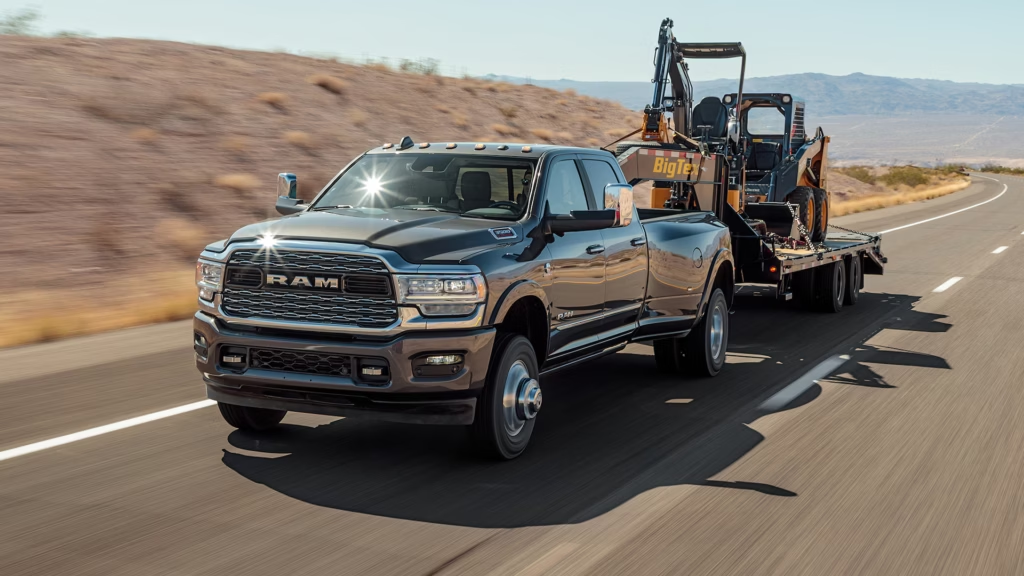
Selecting the best truck for towing involves careful evaluation of your specific needs, budget, and the features that will enhance your towing experience.
Below, we break down the key factors to consider when choosing the right truck for towing:
The first step in selecting the perfect truck for towing is to assess what you plan to tow and how frequently. Key considerations include:
Your budget is a critical factor in determining the best truck for your needs.
While heavy duty trucks provide higher towing capacities, they come at a premium cost. Consider the following:
Modern trucks come with advanced towing technologies and features that enhance safety and ease of use. When selecting your truck, prioritize:
Durability is essential for heavy towing. Trucks with reinforced frames, robust transmissions, and advanced cooling systems are better equipped for long term towing demands.
By balancing your towing requirements, budget, and the available features, you can choose a truck that meets your needs efficiently without overinvesting in unnecessary capabilities.
Choosing the best truck for towing is crucial for ensuring safety, efficiency, and performance, whether you’re hauling recreational loads or handling heavy duty commercial tasks.
By assessing your towing needs, budget, and the advanced technologies available, you can make a more informed decision.
Don’t forget to explore towing packages and upgrades, which further enhance a truck’s towing potential by adding upgraded engines, advanced suspension systems, and other essential towing features.