
Driving through muddy terrain is not just an off road skill. It’s a practical ability that can be essential for anyone navigating wet, rural roads or exploring remote trails.
Muddy conditions pose unique challenges, like reduced traction and increased chances of getting stuck, making proper preparation and technique crucial.
Whether you’re on a weekend adventure or handling unforeseen muddy roads after rain, knowing how to drive in slippery mud keeps your journey safe and stress free.
Mud can be unpredictable. Ruts, soft spots, and slick surfaces can trap your tires or cause your vehicle to skid.
Without the right skills and equipment, driving in mud can quickly turn into a frustrating experience.
This guide covers everything you need to conquer slippery mud with confidence and control.
Before heading out, inspect your vehicle thoroughly. Ensure your tires are in good condition, and consider using all terrain or mud tires for better grip.
Check your 4WD or AWD system, if available, to ensure it’s functional. Carry essential tools like a portable air compressor, recovery straps, and traction boards to assist in tricky situations.
Being proactive minimizes the risk of getting stranded.
Equip yourself with the right tools, such as traction aids like TruckClaws or recovery boards. Learn how to get unstuck in mud or snow with TruckClaws for a hassle free experience.
Having these tools on hand ensures you’re prepared to tackle unexpected challenges.
To enhance traction, lower your tire pressure slightly, increasing the surface area that contacts the ground. For instance, reduce the pressure by 15-20% for most off road tires.
Avoid deflating your tires too much, as it can lead to tire damage or make extraction harder. Carrying a portable air compressor lets you adjust tire pressure back to normal after crossing muddy areas.
When driving in mud, using the correct gear is critical. Shift into low range gears to maintain consistent torque and prevent your wheels from spinning excessively.
If your vehicle has a slippery terrain mode, activate it for optimal performance. High speed driving in muddy conditions can dig your tires deeper, so focus on steady and controlled power delivery.
Braking and steering in mud differ from dry road conditions. Sudden braking can cause your vehicle to lose traction. Learn how to get a truck out of mud safely with the right techniques.
Pro Tip: If your vehicle starts skidding, turn the steering wheel in the direction of the skid to regain control.
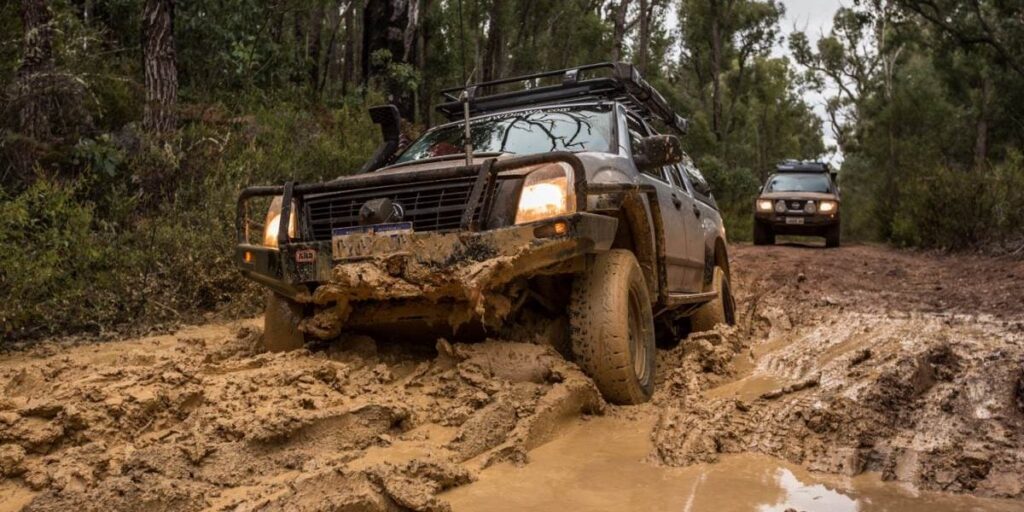
Steering in mud requires a balance of control and finesse. Avoid aggressive steering movements, which can destabilize your vehicle. Follow these tips:
By maintaining focus and smooth steering, you’ll stay on track even on challenging terrain.
Maintaining momentum is key to conquering muddy patches. Drive at a steady, moderate speed, ensuring your tires maintain grip.
Avoid accelerating suddenly, as it can cause your tires to spin. Similarly, driving too slowly can allow your tires to sink into the mud.
Momentum helps you “float” over tricky sections while maintaining control.
Not all mud is the same. Dark, shiny patches often indicate deeper, slicker mud, while textured or drier areas provide better traction. Before entering muddy terrain:
Being aware of ground conditions helps you choose the safest path.
After navigating mud, inspect your vehicle thoroughly:
Driving in mud can strain your tires. After cleaning them, check the air pressure and adjust it back to the recommended levels. Inspect for cuts or embedded debris that could lead to punctures.
Driving in muddy conditions requires preparation, technique, and the right tools. From lowering tire pressure to spotting safe ground, these tips help you navigate slippery terrain confidently.
Equip your vehicle with traction aids like TruckClaws, which are invaluable for getting unstuck in mud, sand, or snow.
By combining skill and preparation, you’ll conquer any muddy path and enjoy your adventure safely.