The Psychology of Getting Stuck: Why Drivers Make Bad Recovery Decisions
Getting stuck isn’t just a tire problem—it’s a mind problem.
The short answer to why drivers make bad recovery choices is simple: cognitive biases like overconfidence and the illusion of control, mixed with stress while driving, push people to floor the gas, spin the tires, and make vehicle recovery mistakes.
In the heat of the moment, the brain says “force it,” even when the road says “stop and think.”
Rushing and time pressure make driver decision-making even worse. You trust what worked once, or you follow habit.
Pride can stop you from asking for help. So you choose force over safe recovery techniques and get stuck deeper.
In this guide, you’ll learn easy steps to break that pattern: pause, look around, and use the right tools—traction aids like TruckClaws, tow straps, and chains—or call roadside help.
We’ll keep it simple and show how driver psychology shapes choices, and how to recover smarter in mud, snow, or sand.
The Psychology Behind Bad Recovery Decisions
When a driver gets stuck, the vehicle isn’t the only thing trapped—the mind also falls into patterns that make the situation worse.
Let’s look at the cognitive biases and emotional triggers that often mislead drivers into taking risks instead of making safe recovery decisions.
a. Cognitive Biases That Mislead Drivers
Illusion of Control – Many drivers think they can “power out” if they just push harder on the gas. In reality, flooring the accelerator usually spins the tires and digs the vehicle deeper.
Overconfidence Bias – Believing your skills are better than most drivers makes you underestimate danger. This risky driving behavior often leads to poor vehicle recovery techniques.
Availability Heuristic – If you once got out of mud easily, you may assume you can do the same again, even if conditions are much worse.
Normalcy Bias – Telling yourself “everything will be fine” blinds you to real warning signs, like worsening weather or icy ground.
Dunning-Kruger Effect – New or inexperienced drivers often overestimate their abilities, which leads them to take chances that trained drivers would avoid.
b. Emotional Triggers That Push Risky Moves
Stress and Panic – Feeling trapped raises the fight-or-flight response, which makes clear thinking hard.
Time Pressure – Worrying about being late pushes drivers toward rushed, unsafe maneuvers.
Anger, Pride, and Frustration – Ego can take control, and instead of stopping to assess, drivers act on impulse.
Loss Aversion – Many avoid calling a tow truck or roadside service because of cost or pride. Instead, they try risky shortcuts that often backfire.
The mind says “hurry,” but the smart choice is often to pause, calm down, and use tools or techniques that actually work.
The Cycle of Poor Recovery Decisions
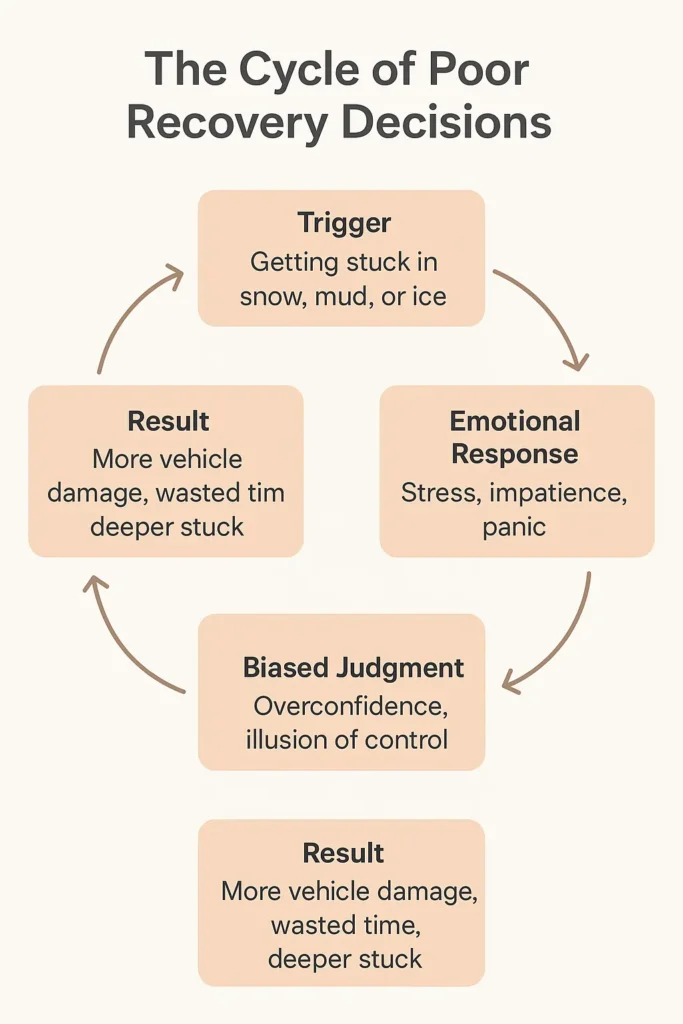
Bad recovery choices don’t happen by accident—they usually follow a simple cycle. Once you understand this chain, it’s easier to see why drivers fall into the same traps again and again.
Trigger – The driver gets stuck in snow, mud, sand, or ice. The tires lose grip, and the vehicle stops moving forward.
Emotional Response – Right away, feelings like stress, impatience, or panic take over. Instead of thinking calmly, the driver feels pressure to act fast.
Biased Judgment – With emotions running high, overconfidence and the illusion of control kick in. The driver believes they can solve the problem with force.
Poor Action – They press harder on the gas, spin the wheels, or rock the vehicle aggressively. These risky driving behaviors rarely help.
Result – Instead of escaping, the vehicle sinks deeper, wastes fuel, and risks vehicle damage. The situation is now worse, not better.
This cycle explains why so many driver decision-making mistakes happen under pressure.
The real way out is to break the cycle—pause, think, and choose safe recovery techniques instead of reacting in panic.
Situational & Environmental Factors
Not every driving situation is the same. The environment and type of vehicle play a big role in how drivers react when they get stuck.
These factors often add pressure and make driver decision-making even harder.
High-Risk Environments – Conditions like mud, snow, ice, sand, or heavy rain create low traction. In these settings, even small mistakes can quickly turn into major vehicle recovery problems.
Vehicle Types – Getting stuck feels different depending on what you drive. SUVs and pickup trucks often face off-road recovery mistakes, while semi-trucks and commercial fleets deal with higher risks and larger costs if things go wrong.
Professional Drivers – Truckers and fleet drivers often balance safety vs. productivity conflict. Deadlines and schedules push them to act fast, sometimes at the expense of safer recovery techniques.
These situational factors explain why a driver’s psychology isn’t the only challenge. The road, the weather, and the vehicle type all shape the pressure that leads to poor recovery decisions.
How to Break the Cycle: Smarter Recovery Practices
The good news is that bad recovery choices aren’t automatic. Drivers can break the cycle by slowing down, thinking clearly, and using the right steps. Here’s how:
a. Pause & Assess
The first step is simple: stop and breathe. Stress and panic cause rushed mistakes. By calming down, you give yourself time to see the situation clearly and reduce decision fatigue.
Even a short pause can prevent costly vehicle recovery mistakes.
b. Shift from Ego to Safety
Pride and impatience often push drivers into risky driving behavior. Instead, admit the limits of what you and your vehicle can do.
Choosing safety over ego doesn’t make you weak—it keeps you from turning a small problem into a bigger one.
c. Adopt Better Recovery Habits
Good habits matter. Defensive driving and off-road training teach drivers how to handle high-risk environments like mud, snow, ice, and sand.
Following safe procedures again and again builds natural responses that are smarter than panic.
d. Use the Right Tools Instead of Force
The smartest recovery is using tools designed for the job:
Recovery boards and snow chains – provide traction on slippery surfaces.
Tow straps and winches – help pull a stuck vehicle safely without damaging it.
Roadside assistance or towing services – a backup when conditions are too dangerous.
With the right gear, drivers avoid spinning their wheels and damaging their vehicles. Tools like TruckClaws take the guesswork out of recovery and give drivers a safe, reliable option when the road fights back.
Why Tools Like TruckClaws Help Drivers Make Better Decisions
When a vehicle gets stuck, drivers often rely on instinct—spinning the wheels harder, rocking the car, or stuffing random objects under the tires.
These attempts are fueled by stress, pride, or guesswork, and usually make things worse. Tools like TruckClaws give drivers a smarter option by replacing risky improvisation with proven traction.
Removes the Guesswork
Instead of gambling with risky accelerations, TruckClaws deliver reliable tractionyou can count on. The result: less wasted energy, less vehicle damage, and a safer recovery.
Faster and Safer Than Improvising
Trying to wedge wood, rocks, or floor mats under the tires is both time-consuming and dangerous. TruckClaws attach in minutes, giving you a practical solution that works when you need it most.
Effective Across Environments
Whether it’s snow, mud, ice, or sand, TruckClaws provide consistent grip. Drivers don’t have to second-guess whether their trick will work—one tool covers multiple conditions.
Confidence Without Cognitive Biases
Instead of relying on overconfidence (“I can power out of this”) or past experience that doesn’t apply, drivers gain confidence from having the right equipment. This shifts recovery decisions from psychological traps to practical, safe solutions.
With TruckClaws, drivers don’t just escape being stuck—they escape the cycle of bad decisions that often makes recovery more dangerous than the problem itself.
Key Takeaways
Most bad recovery decisions aren’t just about driving skill—they stem from a blend of cognitive biases, stress, and ingrained habits.
By recognizing these psychological patterns, drivers can pause, assess, and avoid impulsive mistakes that worsen the situation.
Smarter recovery means combining psychological awareness, the right tools (like TruckClaws), and the willingness to call for help when needed.
In short: the best recovery strategy is less about brute force—and more about calm thinking, smart preparation, and reliable equipment.
Final Thoughts: Why Prepared Drivers Stay in Control
Getting stuck is inevitable—but making poor recovery decisions doesn’t have to be. Intelligent recovery isn’t about brute force or ego; it’s about staying rational, prioritizing safety, and preparing ahead of time.
By understanding the psychology behind bad decisions and equipping yourself with the right tools, you can turn a stressful situation into a manageable one.
Equip yourself with the right mindset and the right tools—because when the road fights back, smart preparation wins.