
When a utility truck stuck in mud can’t reach a job site, the delay affects more than just one crew. Power restoration, telecommunications work, water line repairs, and other field operations can all come to a stop until the vehicle is recovered. Many utility trucks work in remote areas where soft ground, heavy rain, and unpaved access roads make getting stuck a common problem.
The good news is that many recoveries can be completed safely without calling a heavy wrecker. Knowing what to do immediately after losing traction can reduce downtime, prevent expensive vehicle damage, and get your crew back to work faster.
Unlike delivery trucks that stay on paved roads, utility vehicles regularly leave the highway to access:
Many of these locations have soft soil that looks stable until a heavy truck drives across it. Once the drive tires lose traction, the vehicle’s weight quickly pushes them deeper into the mud.
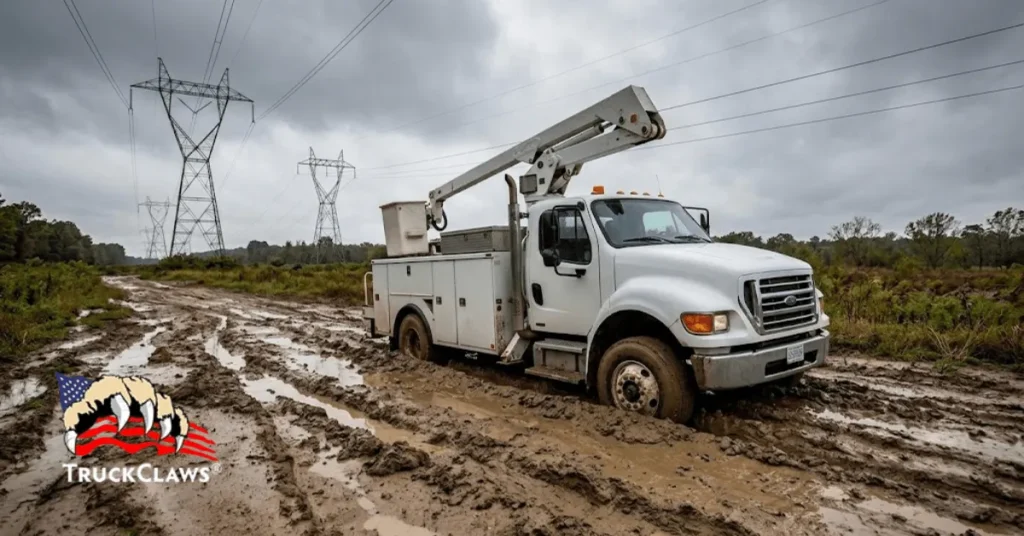
One of the biggest recovery mistakes is pressing harder on the accelerator.
When the tires spin freely, they dig deeper into the mud instead of moving the truck forward. Within a few seconds, a simple traction problem can become a difficult recovery. If the wheels continue spinning, stop immediately and inspect the situation before trying again.
💡 Note: For more guidance, read our vehicle recovery mistakes guide.
Walk around the vehicle before attempting recovery. Look for:
The deeper the truck sits, the less effective additional throttle becomes.
Utility trucks often carry heavy payloads, such as:
If the situation allows, removing unnecessary weight reduces pressure on the tires and improves the chance of regaining traction. Never unload equipment if doing so creates a safety hazard.
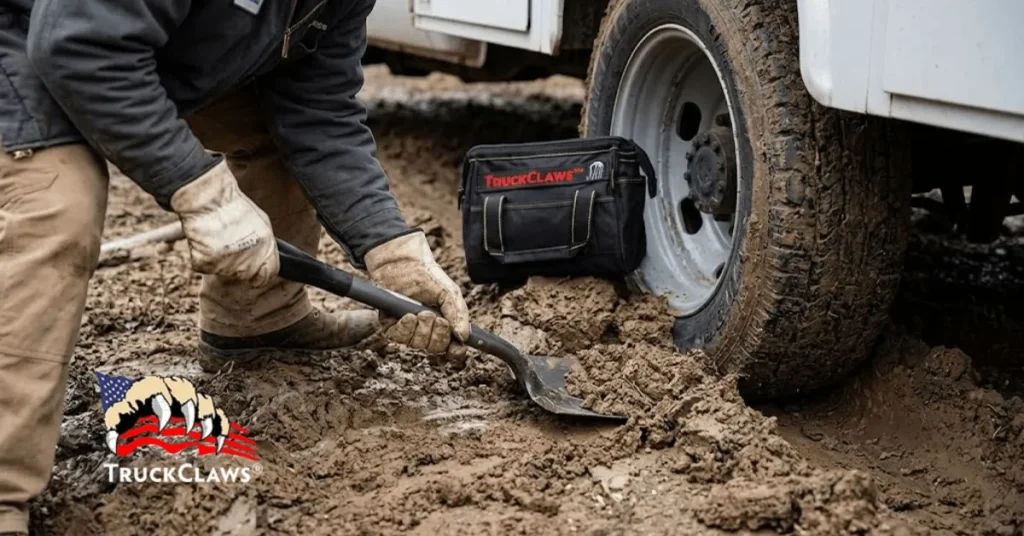
Before trying another recovery attempt, remove the mud that is blocking the tires. A compact shovel can help:
Many successful recoveries start with a few minutes of preparation instead of several minutes of wheel spin.
Most utility trucks become stuck because they lose traction, not because the engine lacks power.
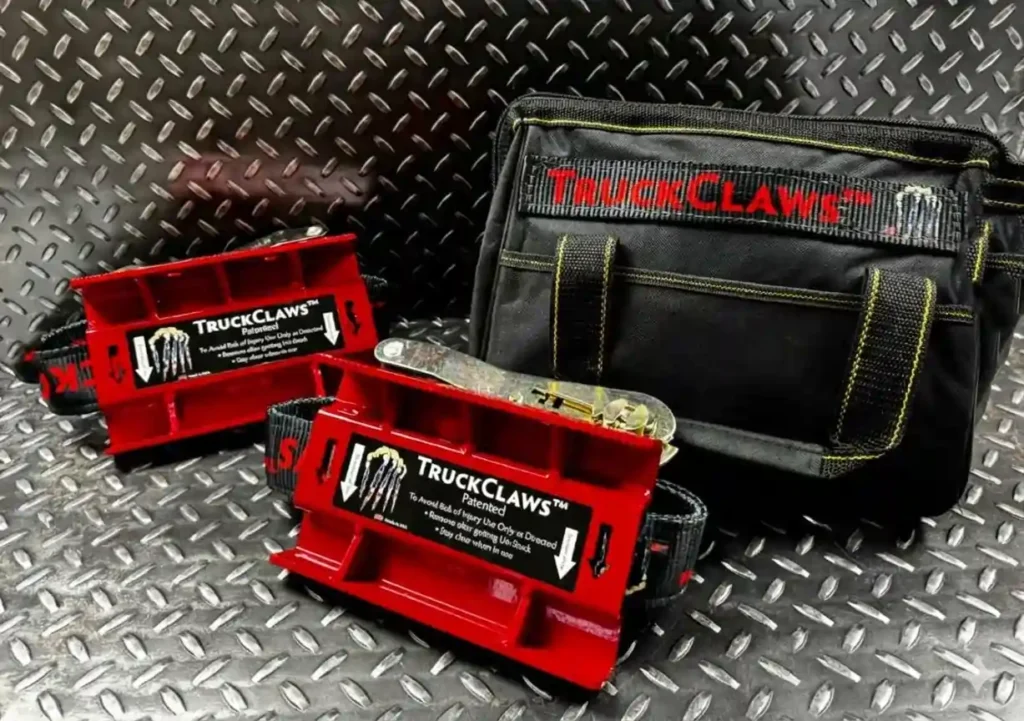
A traction aid gives the drive tires a solid surface to grip, helping the truck move forward instead of digging deeper. TruckClaws traction devices are designed to provide extra grip in mud, wet grass, clay, snow, and other low traction conditions commonly found on utility job sites.
For field crews working in remote locations, carrying a recovery kit can save hours of waiting for a tow truck.
Some situations require professional assistance. Call a recovery service if:
Trying to force a recovery can damage differentials, axles, tires, or suspension components.
A prepared service vehicle can often avoid expensive towing bills. Many fleet managers treat recovery equipment the same way they treat emergency safety equipment, something every truck should carry before heading into the field.
Recommended equipment includes:
After getting free, don’t drive away immediately. A quick inspection can prevent a second breakdown later in the day. Inspect the truck for:
Utility crews often work where pavement ends. Whether servicing electrical infrastructure, repairing pipelines, maintaining telecommunications equipment, or restoring utilities after severe weather, traction problems are common.
TruckClaws provide an additional gripping surface that helps utility trucks regain traction before the vehicle becomes deeply buried. They are lightweight, reusable, and easy to carry in a service truck, making them a practical addition for crews that regularly work in muddy environments.
Can a utility truck recover from mud without a tow truck?
Yes. If the truck has not sunk too deeply and the frame is still clear of the ground, removing mud and using traction aids may allow the vehicle to recover without professional towing.
Why do utility trucks get stuck so often?
Utility crews frequently drive onto soft shoulders, easements, construction sites, and remote access roads where heavy vehicles can quickly lose traction after rain.
Should I keep spinning the tires if the truck isn’t moving?
No. Continuous wheel spin usually makes the recovery more difficult by digging deeper ruts and reducing traction.
What recovery equipment should utility crews carry?
A commercial recovery kit should include traction devices, a shovel, work gloves, recovery straps, a flashlight, a tire pressure gauge, and other basic recovery tools.
When should I call a recovery service?
If the frame is touching the ground, multiple axles are buried, or repeated recovery attempts have failed, professional recovery is usually the safest option.
A utility truck stuck in mud can delay repairs, increase operating costs, and leave field crews waiting when time matters most. The best recovery starts with stopping wheel spin, checking the vehicle’s condition, clearing mud, and restoring traction before the truck sinks deeper. Carrying the right recovery equipment allows many crews to solve the problem on site, reduce downtime, and get back to serving customers safely.