DOT Inspections are a critical part of keeping our roads safe, especially for large trucks and commercial vehicles.
The Department of Transportation (DOT) is responsible for ensuring that all vehicles on the road, especially commercial motor vehicles (CMVs), are in good condition and follow the safety rules.
These inspections help prevent accidents, protect drivers, and ensure that trucks are not putting others at risk.
For truckers and fleet operators, DOT inspections are essential for staying compliant with the law.
The inspections check if the vehicle is well maintained, safe to drive, and if the driver has the necessary documentation.
If trucks don’t pass the inspections, they could be taken off the road, which can affect businesses and cause delays.
Two major organizations that help oversee these inspections are the Federal Motor Carrier Safety Administration (FMCSA) and the Commercial Vehicle Safety Alliance (CVSA).
The FMCSA makes the rules for DOT compliance, while the CVSA sets the standards for the inspections.
Together, they make sure that commercial vehicles meet safety requirements, ensuring both driver safety and vehicle safety on the roads.
What You Need to Know About DOT Inspections
What is a DOT Inspection?
A DOT inspection is a mandatory check carried out by DOT officers to ensure that commercial motor vehicles (CMVs) are safe to operate on the roads.
These inspections focus on both the vehicle’s condition and the driver’s compliance with safety regulations.
The main goal of these inspections is to make sure that vehicles meet safety standards, preventing accidents and ensuring that trucks are not a danger to other drivers on the road.
For trucking fleet management, regular DOT inspections are crucial. They help ensure that trucks are well maintained, compliant with DOT regulations, and driver safety is prioritized.
If a vehicle doesn’t pass a DOT inspection, it can be placed out of service (OOS), meaning the truck cannot continue driving until the issues are fixed. This can cause delays, disruptions in the business, and fines.
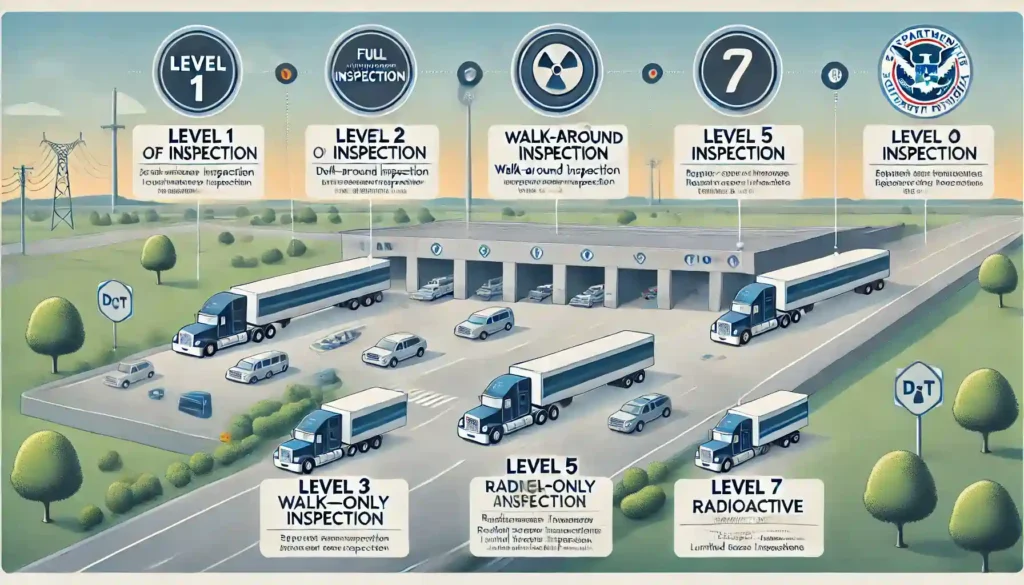
The 7 Levels of DOT Inspections
There are seven levels of DOT inspections, each with a different focus. Let’s look at the most important levels:
Level I: North American Standard Inspection This is the most comprehensive inspection. It includes checks on the vehicle’s braking systems, tires, lights, cargo securement, and driver documentation like the driver’s logbook, medical card, and license. This level of inspection is the most common and thorough.
Level II: Walk Around Inspection This inspection focuses on the vehicle’s exterior and driver paperwork, but it doesn’t check under the vehicle. It’s a simpler inspection but still important for ensuring basic compliance.
Level III: Driver Only Inspection In this level, only the driver’s documentation is checked, including the Commercial Driver’s License (CDL), medical certificate, and logbook. The vehicle itself is not checked.
Level IV: Special Inspection This is a one time inspection usually performed to research specific issues or verify particular vehicle parts.
Level V: Vehicle Only Inspection Here, only the vehicle is inspected. It’s similar to Level I but doesn’t check the driver’s documentation.
Level VI: Enhanced NSA Inspection This level is applied to vehicles carrying hazardous materials or radioactive shipments. It involves stricter checks due to the potential risks involved in transporting these dangerous goods.
Level VII: Jurisdictional Mandated Inspection This inspection targets specific types of vehicles, such as school buses or shuttles, which aren’t covered by other inspection levels.
Understanding these inspection levels helps fleet operators and truck drivers know exactly what is being checked and how to prepare for these inspections.
Regular maintenance and proper driver documentation can help improve the chances of passing these inspections and ensure DOT compliance.
How DOT Inspections Affect Your Business
Impact on Fleet Operations and Safety Ratings
DOT inspections play a crucial role in determining the safety and compliance of your fleet, which in turn affects your business operations.
Every commercial motor vehicle (CMV) is assigned a DOT safety rating based on the results of inspections and overall compliance with safety regulations. There are three primary safety ratings:
Satisfactory: This rating means the carrier meets all DOT regulations and is considered safe for operations. It opens doors for business opportunities and helps maintain a positive reputation in the industry.
Conditional: This rating indicates that the carrier is not fully compliant, with some violations or safety concerns present. While it doesn’t immediately impact the ability to operate, it may lead to challenges when renewing contracts or securing new business. Additionally, this rating can affect insurance premiums, making them higher.
Unsatisfactory: A poor DOT safety rating means the carrier has failed to meet basic DOT safety standards, and the carrier may be ordered to cease operations until improvements are made. An unsatisfactory rating severely affects business reputation, contract opportunities, and insurance rates, as companies with this rating are seen as higher risk.
Ensuring your fleet is ready for any condition is crucial for safety ratings. Using emergency tire traction aids like the TruckClaws™ Commercial Truck Kit, Heavy Duty can provide added security and minimize risks during adverse weather conditions.
Maintaining a Satisfactory safety rating is essential for business success. It helps establish trust with clients, keeps insurance premiums affordable, and allows the fleet to continue operating smoothly.
Consequences of Violations
During DOT inspections, any violations found can have serious consequences for your fleet operations. Common violations include:
Missing documentation: Not having proper driver credentials, logbooks, or inspection reports can result in fines or the vehicle being placed out of service (OOS) until the issue is corrected.
Faulty lights: Issues with vehicle lights (e.g. headlights, brake lights) are common violations. These may seem minor but can lead to serious penalties or the vehicle being put OOS if deemed unsafe.
Cargo securement violations: Failing to properly secure cargo can lead to unsafe driving conditions and significant fines. Improperly secured loads are a major safety risk and can contribute to accidents.
These violations also impact your CSA (Compliance, Safety, Accountability) scores, which are closely monitored by FMCSA.
A poor CSA score can affect your business contracts and overall reputation. Repeat violations can cause increased scrutiny from inspectors and lead to stricter enforcement of DOT compliance.
By ensuring regular maintenance, proper documentation, and cargo securement practices, you can avoid these violations and maintain a positive DOT safety rating, helping your fleet stay safe, compliant, and operational.
Preparing for DOT Inspections
Steps to Ensure DOT Compliance
Preparing for DOT inspections involves ensuring that your fleet, drivers, and operations are fully compliant with all safety regulations.
Here’s a breakdown of key steps to take in order to pass inspections and avoid violations:
Vehicle Maintenance for DOT Inspections
Regular vehicle checks and preventive maintenance are crucial to ensure that your trucks meet DOT safety standards. This includes:
Tire checks: Ensuring that tires are properly inflated and have adequate tread depth.
Brake system maintenance: Checking for proper functionality and ensuring brake pads and systems are in good condition.
Lighting system: Ensuring all lights, including headlights, brake lights, and turn signals, are functioning properly.
Engine components and fluid checks: Regularly inspect the engine and ensure that there are no fluid leaks.
Maintaining a maintenance schedule for your fleet is not just about preventing breakdowns; it’s about staying compliant with DOT regulations and avoiding penalties during inspections.
For truckers operating in snow prone areas, it’s essential to consider the best truck for snow plowing to ensure maximum efficiency during winter months.
Driver Documentation Checks
Driver documentation is just as important as vehicle maintenance. Here are the key documents that drivers should have at all times:
Electronic Logging Devices (ELD): To ensure accurate Hours of Service (HOS) compliance, ELDs automatically track a driver’s driving hours, which are a key part of any DOT inspection.
Driver Vehicle Inspection Report (DVIR): This report is required for both pre-trip and post-trip inspections. It must be completed accurately and on time.
Medical certificates: Drivers must maintain an up to date medical certification that proves they are physically fit to drive.
Driver’s license and registration: Ensure that all driver credentials are valid and up to date.
By keeping these documents in order, drivers can avoid common violations like expired certifications or missing paperwork during inspections.
The Importance of Pre-trip Inspection Checklists
A pre-trip inspection checklist is essential for truckers and fleet operators to ensure that every vehicle is ready for the road. This checklist typically includes:
Checking the vehicle’s lights, brakes, and tires.
Verifying that cargo is properly secured.
Ensuring that the driver has all the necessary documents, such as the DVIR, ELD logs, and medical certificates.
Having a solid pre-trip inspection routine helps identify and resolve issues before the vehicle gets on the road and during DOT inspections, reducing the risk of violations.
Using Technology to Manage Inspections
The use of fleet management software can streamline the DOT compliance process, making it easier for fleet managers and drivers to stay on track.
TruckingOffice PRO, for example, helps truckers manage inspections, track maintenance schedules, and log inspection results.
It allows for automated reminders for when regular inspections are due, reducing the risk of missed or delayed checks.
In addition, electronic logging devices (ELDs) are essential for HOS compliance. ELDs not only ensure that drivers follow legal driving hour limits but also make it easier for inspectors to verify driving hours during roadside inspections.
These devices help avoid logging errors and ensure that driver documentation is accurate and up to date, which can help pass DOT inspections with ease.
By combining regular vehicle maintenance, proper driver documentation, and technology tools like TruckingOffice PRO and ELDs, fleets can stay ahead of DOT inspections, reduce the risk of violations, and maintain DOT compliance at all times.
Avoiding Violations and Common Mistakes
How to Pass DOT Inspections
Passing a DOT inspection is not just about luck. It’s about preparation. There are several best practices that can help you avoid the most common inspection violations, ensuring that your fleet stays compliant and your drivers stay safe:
Avoid Expired Inspections: Ensure that all vehicles in your fleet undergo regular inspections, and that their inspection certifications are up to date. Expired inspections are one of the most common reasons for violations during DOT checks. Regularly schedule and track inspections through a fleet management system like TruckingOffice PRO to avoid this issue.
Prevent HOS Violations: Hours of Service (HOS) violations can be serious, leading to penalties and potential safety risks. To avoid violations:
Ensure that all drivers use Electronic Logging Devices (ELDs) to accurately record their driving hours.
Make sure drivers are adhering to the legal driving and rest hour requirements as outlined by FMCSA regulations.
Driver Documentation Errors: Missing or expired driver documents (like medical certificates, commercial driver’s license (CDL), or current DVIRs) are frequent violations during inspections. It’s essential to keep all driver credentials up to date. Set up an easy to follow checklist and tracking system to ensure nothing is missed.
Cargo Securement: One of the key DOT standards is ensuring that cargo is properly secured. Improper cargo securement can lead to fines and vehicles being placed out of service (OOS). Always follow cargo securement regulations and ensure that all loads are tightly secured before any journey.
Tips for Successful Inspections
Preparing for a DOT inspection goes beyond maintaining a clean vehicle; it involves taking a proactive approach to safety and compliance. Here are some important tips to ensure successful inspections:
Regular Vehicle Inspections: Conduct regular maintenance checks to ensure that all parts of the vehicle, from brakes to lights to tires, are functioning properly. Keeping your vehicle in peak condition prevents surprise violations during inspections. Use a pre-trip checklist and inspect the vehicle for common issues that inspectors look for.
Keep Your Vehicles Clean: Cleaning your vehicle might seem like a minor step, but it can make a big difference. Dirty or cluttered vehicles can raise red flags during an inspection. Ensuring your vehicle is well kept shows that you take safety seriously, and it can help avoid unnecessary delays.
Driver Safety Training: Educating your drivers is one of the most effective ways to prepare for inspections. Provide regular driver safety training that covers:
The DOT inspection checklist.
Common mistakes to avoid (like HOS violations, missing paperwork, and unsafe driving).
How to properly inspect their vehicle before every trip.
When drivers understand the importance of inspections and how to meet DOT standards, they’re more likely to pass inspections and avoid violations. Regular training helps create a culture of safety and compliance within your fleet.
By following these best practices for vehicle and driver preparation, you can significantly improve your chances of passing DOT inspections. Regular maintenance, keeping documentation up to date, and providing driver safety training are all key components of a successful inspection process. Ensuring that your fleet meets DOT standards will help you maintain a good safety rating, avoid penalties, and ensure the safety of everyone on the road.
Manage Consent
We use cookies to optimize our website and our service.
Functional cookies
Always active
The technical storage or access is strictly necessary for the legitimate purpose of enabling the use of a specific service explicitly requested by the subscriber or user, or for the sole purpose of carrying out the transmission of a communication over an electronic communications network.
Preferences
The technical storage or access is necessary for the legitimate purpose of storing preferences that are not requested by the subscriber or user.
Statistics
The technical storage or access that is used exclusively for statistical purposes.The technical storage or access that is used exclusively for anonymous statistical purposes. Without a subpoena, voluntary compliance on the part of your Internet Service Provider, or additional records from a third party, information stored or retrieved for this purpose alone cannot usually be used to identify you.
Marketing
The technical storage or access is required to create user profiles to send advertising, or to track the user on a website or across several websites for similar marketing purposes.