
Have you ever seen a little traction control light blink or stay on in your car’s dashboard and wondered what it means?
That light is not just for show. It’s a warning that your car’s traction control system might not be working right.
And that matters because this system helps your car stay stable, especially when roads are slippery from rain, snow, or mud.
Most modern cars today come with smart safety systems like TCS (Traction Control System), ABS (Anti-lock Braking System), and ESC (Electronic Stability Control).
These systems work together to keep your tires from spinning or sliding when you speed up or take sharp turns.
But when something goes wrong with them, your dashboard lets you know, usually with a light that won’t turn off.
In this article, we’ll explain what causes the traction control warning light to stay on, how to check and fix the issue, and what you can do if you’re stuck and your car just won’t move.
We’ll also show you how tools like TruckClaws, a strong and smart traction aid for trucks and SUVs, can help when your car’s built in systems aren’t enough.
Let’s get started and make sure you stay safe on the road!
The traction control light is a dashboard warning light that comes on when your vehicle’s traction control system (TCS) is active, or when there’s a problem with it.
This system is part of your car’s vehicle safety systems, and it helps you keep control when your wheels start to slip, especially on wet, icy, or uneven roads.
The traction control system is designed to stop your wheels from spinning when you accelerate too quickly on a surface with low grip, like snow or mud.
It does this by using sensors to detect when one or more wheels are spinning faster than the others.
When that happens, the system automatically reduces engine power or applies the brakes to the spinning wheels to help your vehicle regain traction.
The TCS doesn’t work alone. It uses the same wheel speed sensors as your ABS (Anti-lock Braking System).
These sensors constantly check how fast each wheel is turning. If they notice that one wheel is losing grip, the system reacts in real time.
It also works together with Electronic Stability Control (ESC). While traction control focuses on stopping wheel spin during acceleration, ESC helps keep your vehicle from sliding sideways during turns or sudden moves.
Together, these systems make your car much safer, especially during bad weather or emergency driving situations.
Many people confuse the traction control system with the ABS, but they do different things. The ABS stops your wheels from locking up when you brake hard.
This helps you steer while braking and avoid skidding. Traction control, on the other hand, prevents your wheels from spinning when you’re speeding up.
So, if you see the traction control light on your dashboard, it usually means your car is either helping you stay in control, or warning you that it can’t do its job properly.
If your traction control light stays on, it could be due to several reasons. Let’s break down the most common causes in simple terms.
If you’re dealing with a scenario where your truck is stuck in mud or snow due to poor traction, exploring emergency solutions like TruckClaws can help get you out quickly.
To avoid emergency situations if you notice the traction control light staying on, it’s important to have your vehicle checked for these issues.
When the traction control light stays on, it’s crucial to diagnose the issue correctly to fix it. Here’s a simple step by step guide on how to do it.
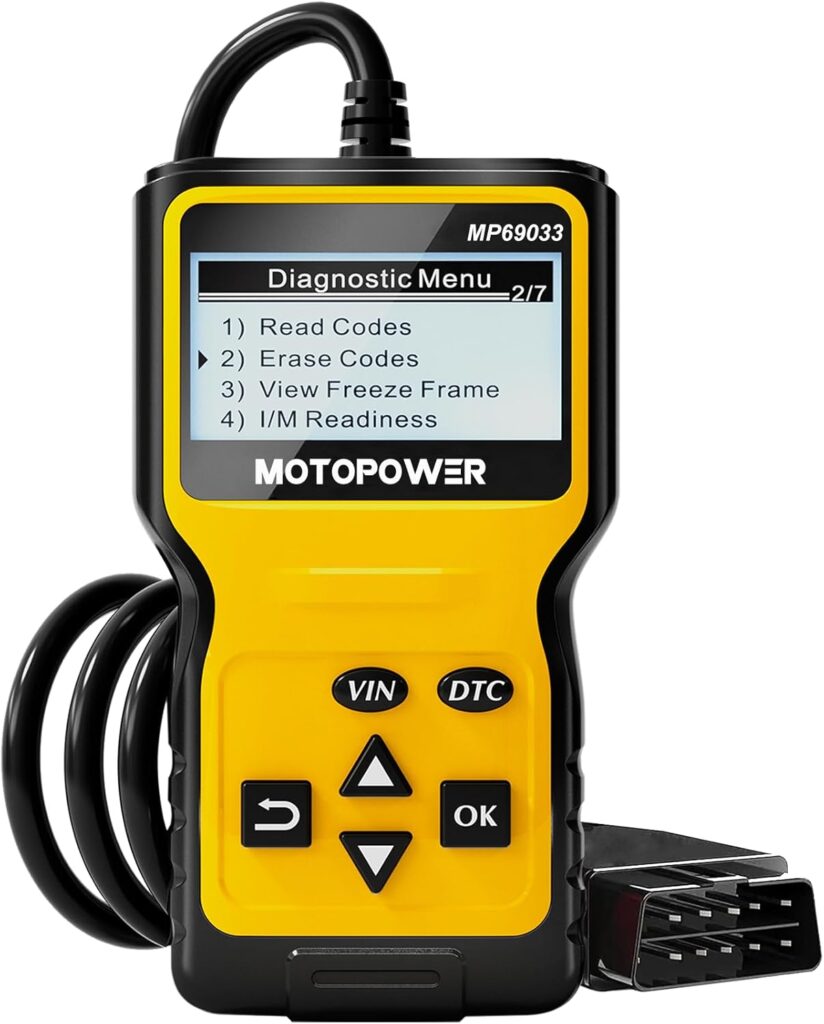
An OBD II scanner is a diagnostic tool that plugs into your car’s OBD II port (usually under the dashboard near the driver’s seat).
It helps read the codes stored in your vehicle’s computer, which can point to the cause of the traction control light being on.
These codes are specific to the problem your car is experiencing and can directly point to the issue with your traction control system or ABS.
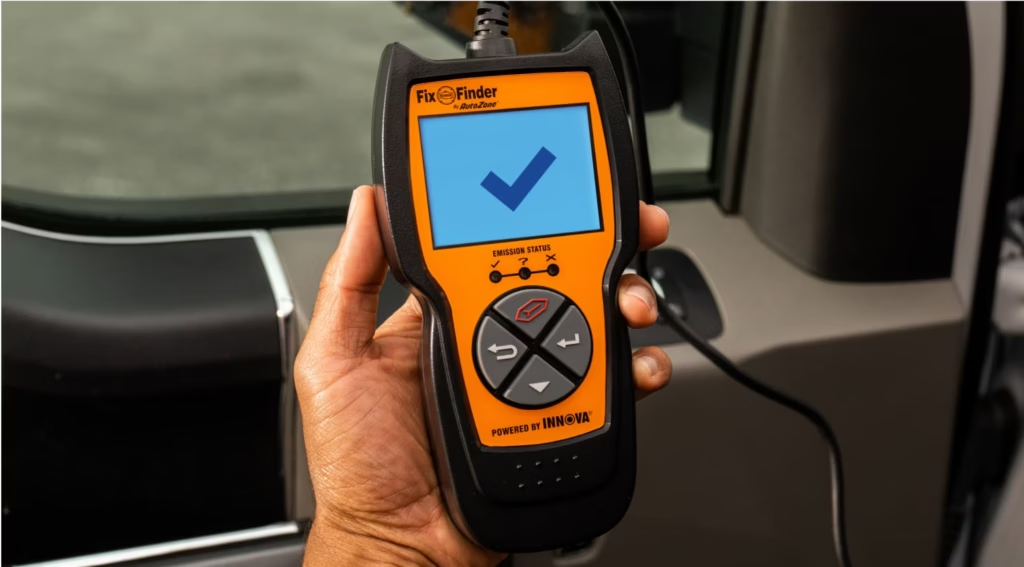
If you don’t have an OBD II scanner, many auto parts stores, like AutoZone, offer free diagnostic scans. You just need to drive your vehicle to the store, and they’ll plug in their scanner for you.
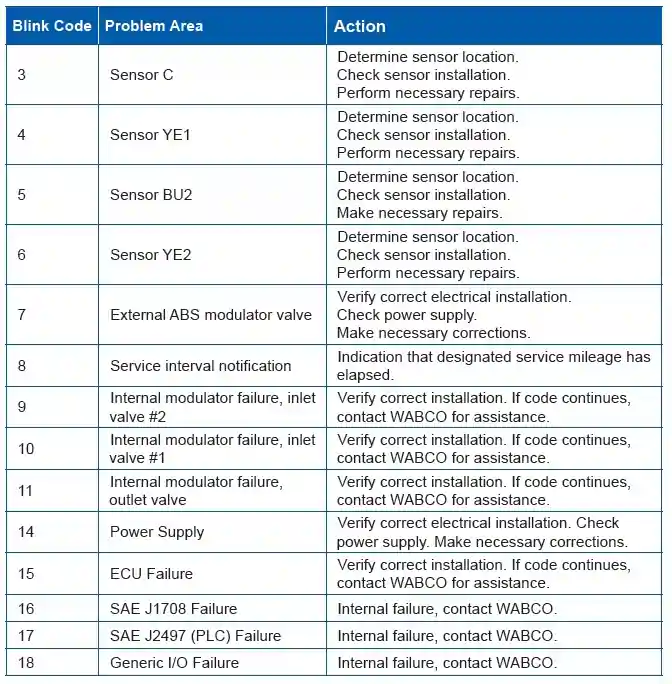
Once you have the diagnostic codes, you can look them up in your OBD II scanner manual or online.
By understanding these codes, you’ll have a clear idea of what component is malfunctioning, whether it’s the wheel speed sensor, steering angle sensor, or something else.
Once you have the diagnostic code, you can proceed to fix the issue or visit a mechanic if you’re unsure.
If the traction control light is still on, it’s time to take action. Below are practical steps you can follow to fix the issue.
Depending on the cause, you can either try a simple fix yourself or seek professional help.
Sometimes, a battery reset or system recalibration can fix a traction control light that won’t turn off.
If the traction control light is on due to a faulty sensor, you’ll need to replace the sensor. This is usually a wheel speed sensor or steering angle sensor.
Sometimes the TCS switch (traction control switch) or fuse may be the culprit. A simple check could save you time and money.
If none of the above fixes the issue, you may need to visit a mechanic for professional repair.
While professional repairs may be more expensive, they can ensure that the problem is fixed correctly.
If you’ve tried these steps and the light remains on, it’s best to consult a mechanic. They can perform in-depth diagnostics and repairs that go beyond DIY fixes.
Seeing the traction control light on your dashboard can be concerning, but is it safe to keep driving?
Let’s break it down so you can make an informed decision about when it’s okay to drive and when it’s risky.
In some cases, it’s perfectly fine to drive with the traction control light on, especially if you’re on dry, smooth roads and your car is still handling normally.
The light may simply be indicating a minor issue with the system, like a temporary glitch or a minor sensor error.
However, the situation can change quickly depending on driving conditions.
Driving with the traction control light on becomes dangerous when you’re faced with wet, icy, or muddy roads. Here’s why:
Without a working traction control system, your tires can lose traction more easily, which could lead to dangerous situations such as:
If your traction control light is on, it’s important to get it fixed as soon as possible, especially if you know you’ll be driving in challenging conditions.
Remember, if you’re unsure about the severity of the issue or if it’s affecting your driving, it’s always best to get a professional diagnosis.
The traction control system is there to keep you safe, and ignoring it can put you at risk.
Modern vehicles are equipped with sophisticated onboard systems like the traction control system (TCS) and anti-lock braking system (ABS) to help maintain vehicle stability and control under normal driving conditions.
These systems work together to keep your car safe, especially on dry and relatively stable surfaces. Here’s how:
While these systems are highly effective on regular roads, they may not be enough when you venture off road or encounter extreme conditions like deep mud, snow, or ice.
In such situations, the limits of your vehicle’s onboard systems are quickly reached, and you may find yourself stuck despite having the latest traction control technology.
When you’re stuck in deep mud, snow, or icy conditions, your vehicle’s onboard systems might struggle to provide the traction you need.
While TCS and ABS work to manage the car’s stability, they don’t provide the kind of physical grip required in extreme off road conditions. This is where external traction aids come into play.
One of the most reliable emergency traction aids for vehicles, particularly trucks and SUVs, is TruckClaws.
These are specially designed devices that you place under your tires to provide the extra grip and traction needed when your onboard systems fail.
TruckClaws are a go to solution when you find yourself stuck in mud, snow, or ice, enabling you to safely continue your journey.
Here’s how TruckClaws help:
While traction mats (like the ones often used as off road recovery tool) can help in some situations, TruckClaws stand out in several ways:
When your vehicle’s onboard systems like TCS and ABS aren’t enough to get you out of a jam, TruckClaws offer a highly effective, portable, and easy to use solution for regaining control.
Whether you’re facing muddy trails, icy paths, or snow covered roads, TruckClaws make sure your tires get the traction they need to continue your journey safely.
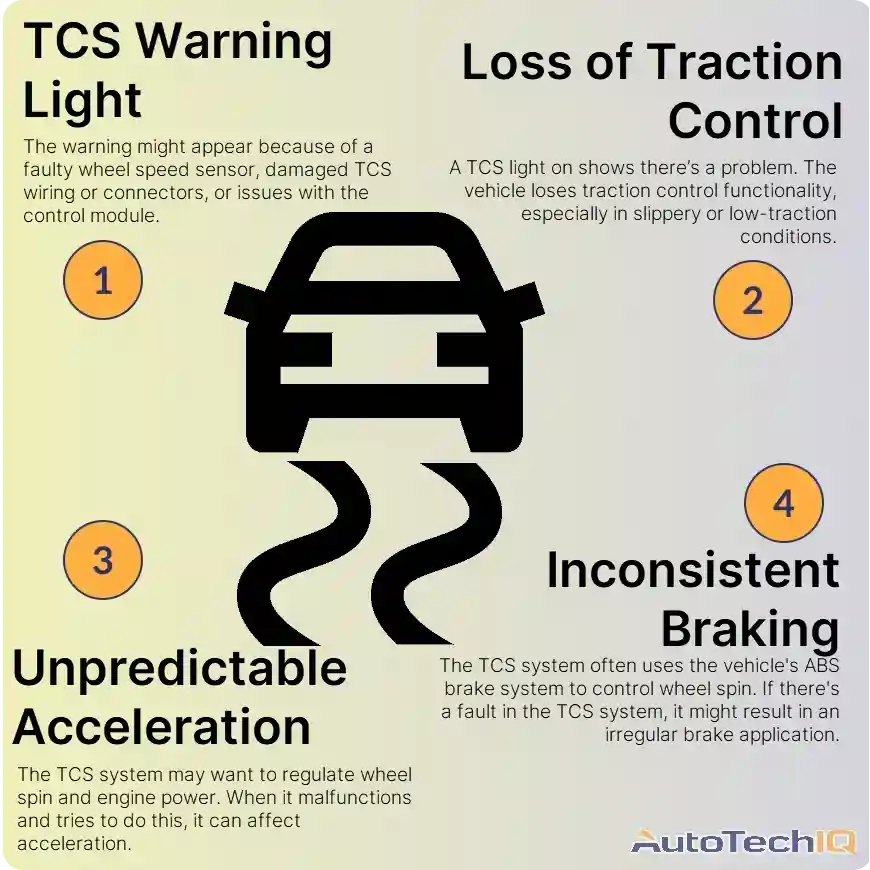
Regular maintenance can help you avoid the frustration of seeing the TCS light come on unexpectedly.
A few simple steps can ensure that your vehicle’s traction control system (TCS) stays in good working condition and reduce the risk of related issues. Here are some essential tips:
Your tires play a crucial role in the effectiveness of your TCS. If your tires are under inflated, worn out, or uneven, your vehicle’s traction control system may struggle to perform correctly. Regularly check the following:
An annual diagnostic scan is a simple yet effective way to ensure your vehicle safety systems, including TCS, are working properly. Having a professional perform this check can:
You can also take advantage of free scans at places like AutoZone to get a quick diagnostic readout and catch any issues early.
The sensors that monitor your wheel speed and vehicle stability are essential for the TCS to function correctly.
These sensors can get dirty over time, affecting their performance and triggering warning lights.
During your tire rotations or annual servicing, ask your mechanic to clean the wheel speed sensors and check for any build up or corrosion.
Regular maintenance and attention to these simple steps can help keep your traction control system functioning smoothly and reduce the chances of encountering the TCS light unexpectedly.
By following these preventative maintenance tips, you can keep your vehicle safety features in top condition and enjoy a safer, smoother ride.
If your traction control light won’t turn off, it could be due to several reasons. Common causes include:
It’s always best to get a professional diagnosis to pinpoint the exact issue. Using an OBD II scanner can help identify any stored diagnostic codes related to the traction control system.
Several factors can cause the traction control light to stay on:
If both the ABS light and traction control light are on, there’s likely an issue with your vehicle’s safety systems. This could mean:
The cost to fix traction control issues can vary depending on the specific problem:
It’s always a good idea to get a diagnostic scan first, which can be done for free at places like AutoZone, to better understand what’s causing the issue and get an accurate cost estimate.
If your wheel speed sensor is malfunctioning, you may notice:
These common questions can help you better understand the traction control light and its potential causes.
If you’re ever unsure, consulting with a professional mechanic can help ensure your vehicle is safe and fully operational.
The traction control light on your dashboard is a crucial safety feature that alerts you when something is wrong with your vehicle’s traction control system (TCS) or other integrated systems like ABS and ESC.
Ignoring this warning light could compromise your vehicle’s ability to maintain control, especially under slippery or challenging road conditions.
It’s essential to take these warning lights seriously and address the issue promptly.
A faulty sensor, low tire pressure, or electrical issue could lead to a loss of control or unsafe driving conditions. Always remember, safety first, don’t wait for a bigger problem to arise.
For those facing real world stuck situations, where your vehicle’s traction control system just can’t keep up, tools like TruckClaws can be a lifesaver.
These emergency traction aids are designed to help your vehicle get unstuck from mud, ice, snow, or other challenging conditions when onboard systems fail.
If you’re unsure about the cause of the light or the problem persists, it’s a good idea to either visit a trusted mechanic or use an OBD II scanner to run diagnostics.
Addressing the problem early can save you time, money, and potential headaches later on. Stay safe, stay in control, and keep your vehicle’s systems in top shape!
Facing traction issues in snow, mud, or sand? When your traction control system isn’t enough, TruckClaws can get you out safely.
Explore our smart emergency traction aids, trusted by off roaders and commercial drivers alike!
Don’t let a stuck vehicle ruin your day, gear up with TruckClaws for the ultimate traction solution when you need it most!