
A box truck stuck in snow can interrupt an entire delivery route. One failed stop in an unplowed customer lot, loading yard, residential driveway, or icy dock entrance can lead to missed deliveries, damaged tires, and an expensive tow call.
The safest response is simple: stop wheel spin early, inspect the drive tires, clear a usable path, and restore traction before the truck settles deeper. TruckClaws can help when the vehicle is stable and lost tire grip is the main problem.
Box trucks combine a tall cargo body with considerable weight on a relatively small tire-contact area. Most delivery models rely on rear-wheel drive, so movement stops quickly when the rear tires cannot bite into packed snow or ice.
Load distribution also changes traction. A lightly loaded truck may have less weight over the drive axle. A heavily loaded truck can press through loose snow and become harder to pull from a rut. Cargo stacked unevenly can make one drive tire carry more weight than the other.
Common trouble spots include:
Drivers who also operate in wet ground conditions can review the guide for a box truck stuck in mud.
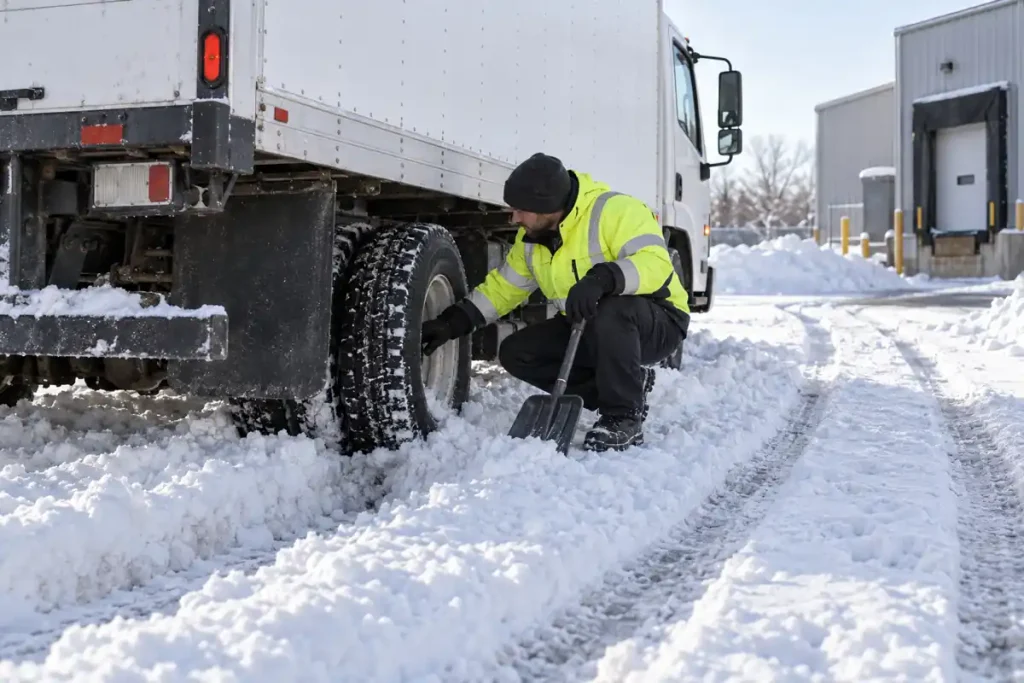
Release the accelerator when the truck stops moving. Fast wheel spin clears loose snow from beneath the tread, but it often leaves the tire sitting on polished ice. It can also deepen the rut until the rear axle or underbody begins contacting packed snow.
Turn on the hazard lights, apply the parking brake, and check for moving traffic before leaving the cab. Wear reflective clothing when visibility is poor. If the truck is blocking a road or sitting near a drop-off, contact the appropriate roadside service rather than attempting a risky recovery.
Aggressive throttle, unsafe tow points, and standing near a loaded recovery strap are among the vehicle recovery mistakes that can turn a manageable delay into vehicle damage or personal injury.
Walk around the box truck from a safe position. Check the rear drive tires, front steering tires, underbody clearance, and intended exit path.
Self-recovery may be practical when:
Call for professional help when the axle or frame is resting on packed snow, several wheels are buried, the truck is leaning, or the route leads toward traffic or a ditch.
A sudden movement can shift unsecured cargo inside the box. Listen for movement and inspect the load when it can be done safely. Do not unload heavy items beside traffic or on slippery ground simply to reduce vehicle weight.
If cargo has shifted heavily to one side, stop the recovery attempt. The change in balance may affect traction and vehicle stability.
Use a sturdy snow shovel to remove packed snow from the front and rear of each drive tire. Create a gradual ramp toward the chosen exit path instead of leaving a steep wall for the tires to climb.
Clear snow touching the differential, axle housing, mudflaps, or lower body panels. Never crawl beneath a truck supported by snow. Check the front tires too; a rear-wheel-drive truck may regain grip but still fail to move if the steering tires are wedged against a frozen ridge.
Sand, gravel, or approved traction granules can improve the starting surface. Avoid bricks, loose metal, lumber scraps, or other objects that could be thrown by a rotating tire.
Box trucks vary greatly in size. A small parcel truck and a heavy straight truck may look similar from a distance while requiring different recovery equipment.
Check the gross vehicle weight rating on the manufacturer label before selecting a kit. Use the vehicle rating and wheel configuration rather than guessing from body size.
The TruckClaws II Light Truck Kit is designed for light trucks, pickups, and smaller commercial vehicles. Heavier Class 7 and Class 8 vehicles rated at 30,000 pounds or more should use the TruckClaws Commercial Truck Kit.
If the truck uses an unusual tire size or wheel opening, check fitment before winter travel. The TruckClaws FAQ answers common compatibility questions.
TruckClaws attach directly to a drive tire and provide a rigid gripping point against snow or ice. Install them only after the truck is stationary, the parking brake is applied, and the area around the wheel is clear.
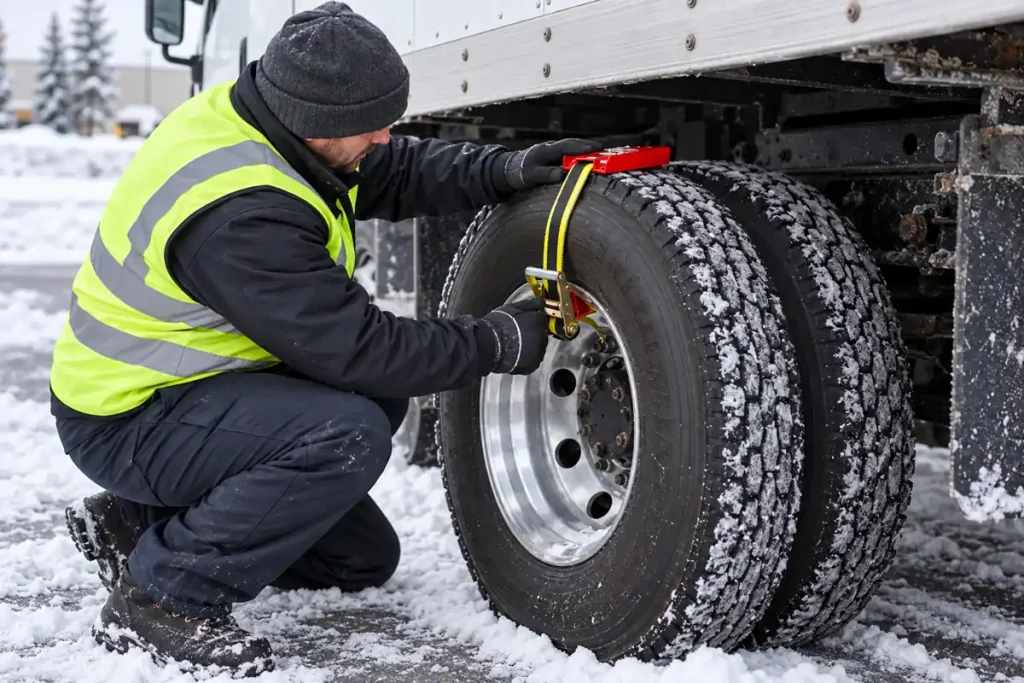
Follow this basic sequence:
Drivers using the lighter system should follow the TruckClaws II installation guide. Heavy commercial vehicles should use the Commercial Kit installation guide.
Select a low gear and keep the steering wheels as straight as the exit path allows. Apply light throttle so the claw can engage the snow without violent wheel movement.
Maintain slow, steady motion once the truck starts moving. Continue until every tire reaches firm ground. Stopping halfway through the rut may leave the truck trapped again.
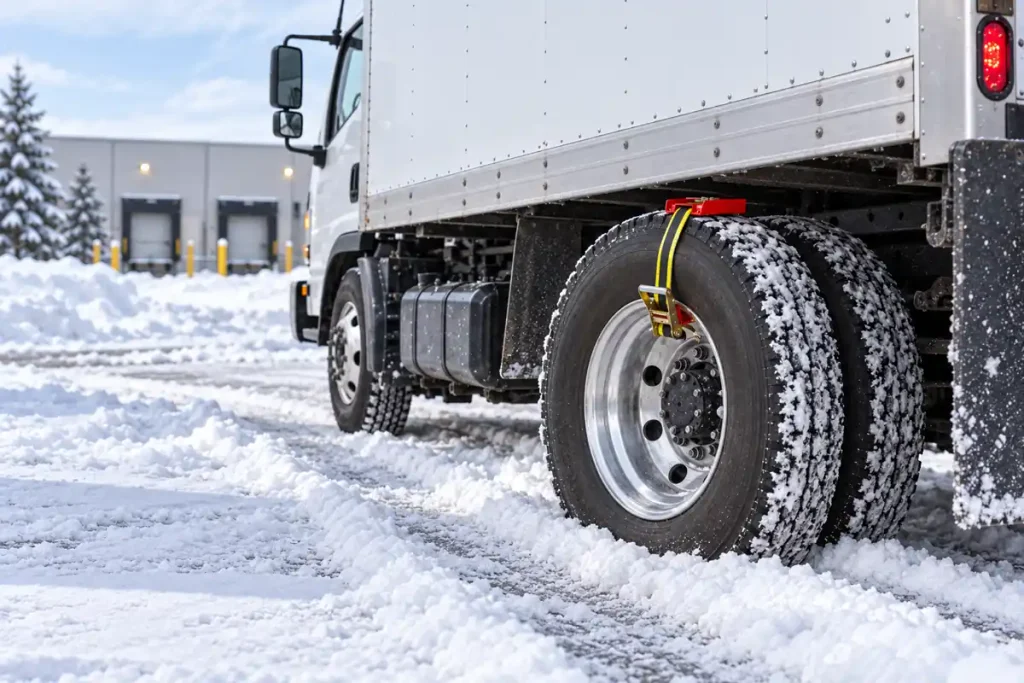
Release the accelerator if:
Secure the truck and inspect the setup before another attempt. More throttle is not a substitute for grip.
Snow chains are intended for sustained travel where they are allowed or legally required. TruckClaws are temporary recovery devices used after a vehicle loses traction.
A delivery fleet may carry both. Chains help trucks travel through regulated winter routes, while TruckClaws supply concentrated grip during a stuck-truck event. The comparison of traction aids and snow chains explains the difference in greater detail.
TruckClaws do not replace chains required by transportation authorities.
Stop self-recovery and request professional assistance when:
Drivers operating heavier vehicles can also review the related guide for a semi truck stuck in snow.
Remove TruckClaws after reaching firm ground. Before returning to the delivery route, inspect:
Listen for new grinding, clunking, or vibration during the first slow movement. Clean snow, moisture, and road salt from the claws, straps, and ratchets before placing them back in storage.
A practical box-truck recovery kit should contain:
Keep the equipment in an accessible compartment. A recovery kit buried behind cargo is difficult to reach when the rear door is blocked by a snowbank.
Can a box truck get unstuck from snow without a tow?
Yes, when the vehicle remains stable, the axle is clear, and lost tire grip is the main problem. A high-centered, leaning, damaged, or deeply buried truck needs professional assistance.
Which TruckClaws kit does a box truck need?
The correct kit depends on the vehicle’s GVWR, tire size, and wheel configuration. Smaller commercial vehicles may use TruckClaws II, while trucks rated at 30,000 pounds or more require the Commercial Kit.
Which tires should receive TruckClaws?
Install the devices on the powered drive tires according to the relevant product guide. Do not assume every box truck has the same drivetrain layout.
Can TruckClaws be used on ice?
TruckClaws can add a rigid contact point on snow and ice, but success depends on correct installation, surface conditions, vehicle weight, and gentle throttle.
Can TruckClaws stay installed during the delivery route?
No. Remove them after the vehicle reaches firm ground. They are temporary recovery tools rather than equipment for normal road travel.
When a box truck gets stuck in snow:
Early action protects the vehicle and the delivery schedule. When the truck remains stable and traction is the only problem, the right TruckClaws kit can help the drive tires regain the bite needed to reach firm ground.